
Industrial Rebar Threading Solutions for Maximum Tensile Strength
Why Rebar Threading for Industrial Projects Is a Structural Game-Changer
Rebar threading for industrial projects is the process of cutting or rolling precision threads onto the ends of reinforcing steel bars so they can be mechanically spliced using couplers — instead of relying on traditional overlapping methods that waste material and weaken joints.
If you need a fast answer, here is what matters most:
- What it does: Creates threaded ends on rebar for use with mechanical couplers
- Why it matters: Delivers stronger, more reliable load transfer than lapped connections
- Best machine type: Automatic threading machines for high-volume industrial work; chaser machines for large-diameter or heavy-duty bars
- Key applications: High-rise buildings, bridges, tunnels, pile foundations, precast concrete
- Market signal: The global rebar threading machine market is valued at $173.34 million in 2026, growing at a 7.5% CAGR through 2034
For Midwest infrastructure contractors managing tight deadlines and demanding structural specs, understanding threading technology is not optional — it directly affects your schedule, your steel budget, and whether your connections pass inspection.
I’m Pauline Horton, and in this guide I’ll walk you through everything from machine mechanics and market trends to how threaded rebar integrates with custom anchor bolts for maximum tensile strength.
Easy rebar threading for industrial projects glossary:
The Mechanics of Rebar Threading for Industrial Projects
To understand why threaded connections are replacing older methods on modern job sites, we first have to look at the machinery that makes it possible. Preparing reinforcing steel for high-load industrial applications requires specialized equipment capable of handling ultra-hard Thermo-Mechanically Treated (TMT) and high-strength carbon steel bars.
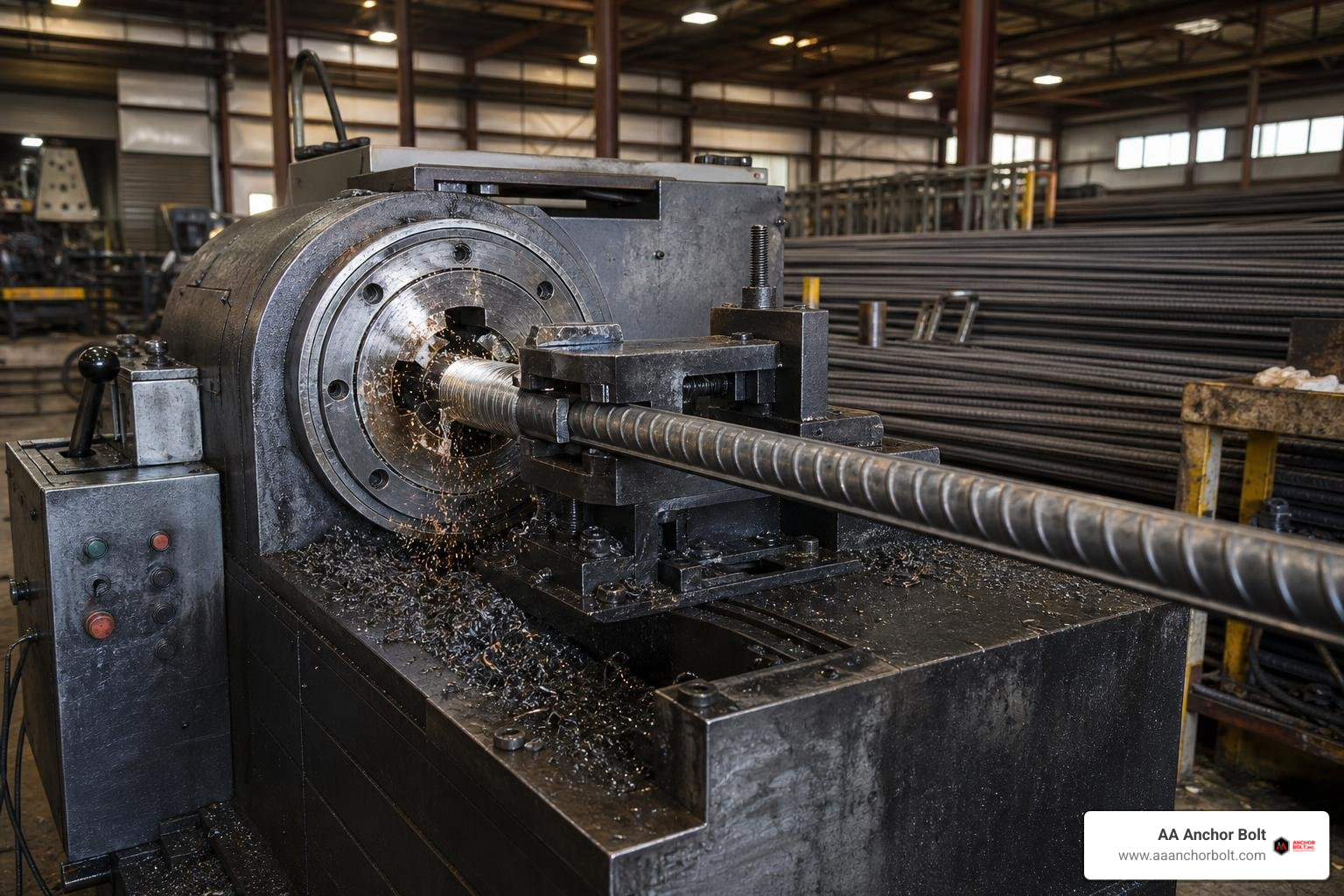
When we talk about preparing reinforcing steel, we are looking at a process that turns standard ribbed rebar into a highly engineered structural component. In the past, engineers simply overlapped bars and tied them with wire, hoping the surrounding concrete would handle the load transfer. Today’s , high-load industrial designs require a much more reliable approach: mechanical splicing.
To achieve this, we use dedicated rebar threading machines. These machines are engineered to handle the unique geometry of reinforcing steel, which is characterized by raised external ribs. You cannot simply run a standard threading die over a ribbed bar; the uneven surface would destroy the die and produce weak, inconsistent threads.
Instead, modern industrial threading relies on a precise, multi-step mechanical sequence. This sequence ensures that the core diameter of the bar is preserved while creating clean, uniform threads that can perfectly engage with structural couplers. For a deeper look into how these systems are integrated into large-scale engineering, check out The Civil Engineer’s Guide to Threaded Rebar and Infrastructure.
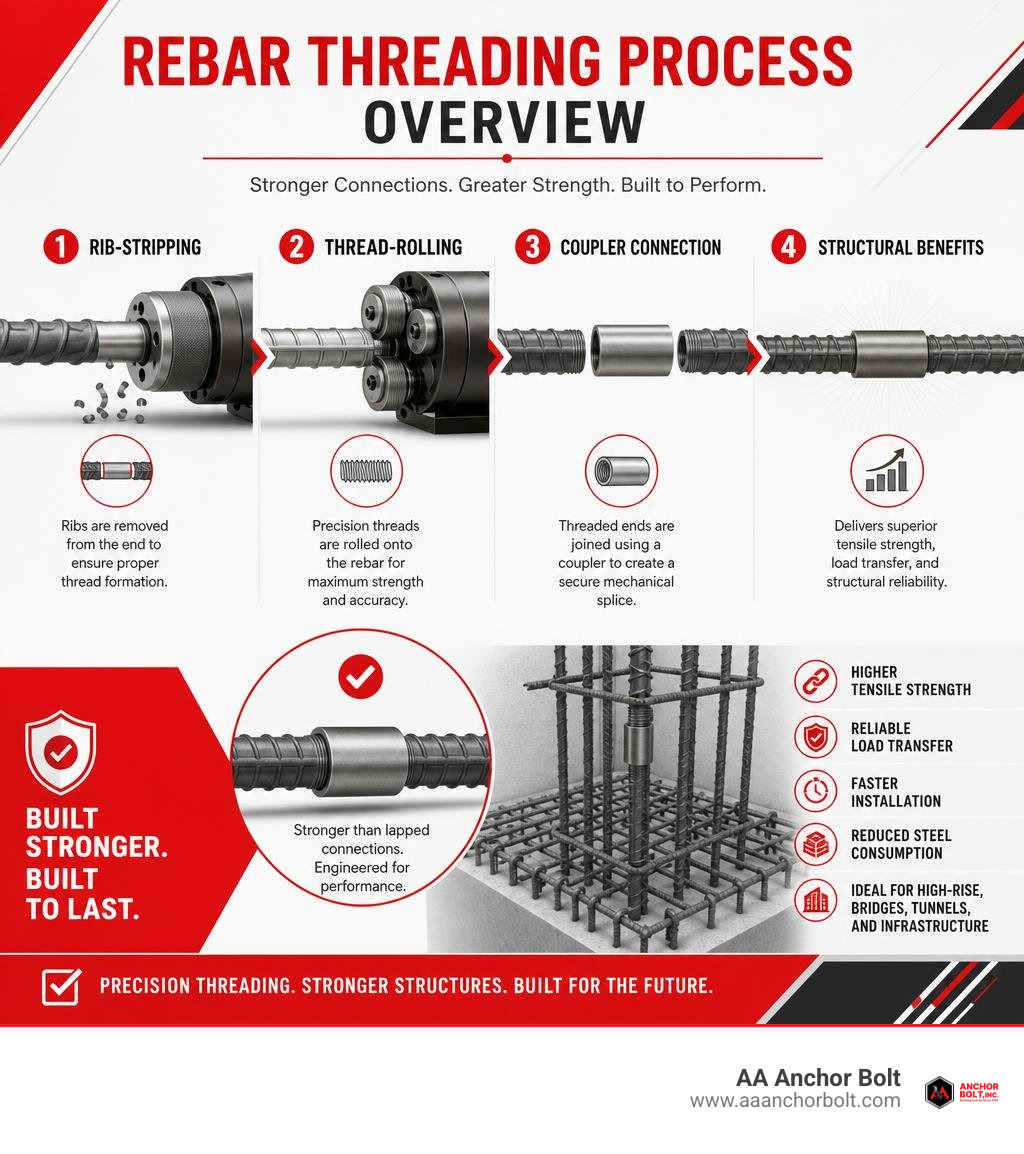
How a Rebar Threading Machine Works
The standard industrial threading process typically involves two distinct mechanical stages performed in a single, continuous operation:
- Rib-Stripping (Peeing): The machine first uses a set of cutting blades to shave off the external longitudinal and transverse ribs from the end of the rebar. This creates a perfectly smooth, cylindrical surface on the outer diameter of the bar, prepared to the exact specification required for threading.
- Thread-Rolling: Once the ribs are stripped, the machine engages thread-rolling dies. Unlike cut threading, which removes material to form threads, thread-rolling uses extreme hydraulic and mechanical pressure to cold-form the metal. The steel is physically displaced, forcing it into the valleys of the die and raising the thread profile.

Cold-rolling is highly preferred over cut threading for structural reinforcing steel. Because no metal is removed during the rolling phase, the grain flow of the steel remains continuous and is actually compacted. This work-hardening effect increases the yield and tensile strength of the threaded portion, ensuring that the threaded end is just as strong—if not stronger—than the unthreaded bar body. To learn how to execute this process efficiently on-site, see our guide on How to Master Rebar Threading in Less Than an Hour.
Rebar Chaser Threading Machine vs. Standard Threading Systems
While rib-stripping and thread-rolling are standard for typical mechanical couplers, certain heavy-duty industrial applications require a different mechanism: the rebar chaser threading machine.
A chaser machine uses a tangential chaser system to cut clean, highly accurate threads directly onto TMT and round steel bars. Instead of rolling the material, the chaser system utilizes high-hardness cutting dies—typically manufactured from premium D2 or M2 tool steel hardened up to 60 HRC (Rockwell C scale). These ultra-hard dies are exceptionally resistant to wear and can cut threads through the toughest outer crust of high-strength steel.
The tangential chaser design allows for superior cutting accuracy and flexibility. It is particularly valuable when projects require custom thread lengths (some models can cut continuous threads from 32mm up to 400mm in length) or when working with non-standard bar diameters. For instance, heavy-duty chaser machines, such as the Rebar Chaser Threading Machine – Mitro Industries, can comfortably handle an expansive rebar diameter range of 8mm to 65mm (1/4 inch to 4 inches depending on the specific die head size).
Standard thread-rolling machines, by contrast, are often optimized for high-speed, repetitive processing of mid-range structural sizes (typically 16mm to 40mm) with standard thread lengths of up to 100mm. Choosing between a chaser and a roller depends entirely on your project’s specific diameter requirements, structural design rules, and whether the engineer of record specifies rolled or cut threads.
Structural Integrity: Threaded Couplers vs. Traditional Lapping
In heavy civil and industrial construction, structural joints are the most critical points of any concrete assembly. Historically, structural engineers relied on lapping—placing two parallel rebars side-by-side and tying them together—to transfer stress from one bar to another through the surrounding concrete.
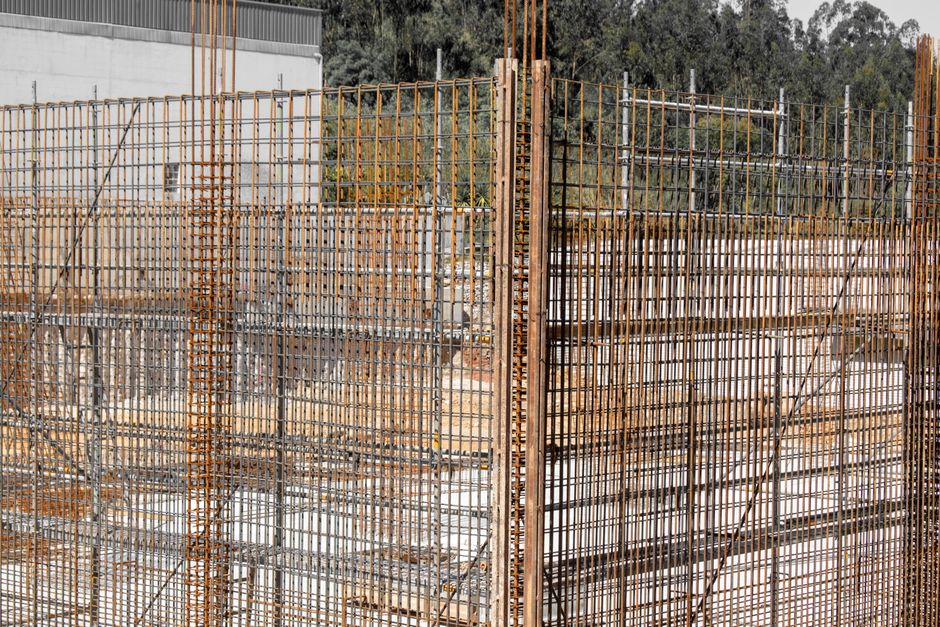
However, modern engineering demands have exposed the severe limitations of lapping, making threaded mechanical couplers the preferred choice for robust structural design. To understand how these couplers work to keep concrete strong under extreme stress, read Get a Grip: How Rebar Splice Couplers Keep Concrete Strong.
Eliminating the Weak Points of Traditional Lapping
Traditional lapping methods introduce several structural and logistical vulnerabilities to industrial projects:
- Concrete Congestion: Lapping requires overlapping a significant length of steel. In heavily reinforced columns, beams, and shear walls, this doubling of bars crowds the formwork. This congestion makes it incredibly difficult for concrete aggregate to flow smoothly, leading to air pockets, voids, and “honeycombing” that compromise structural integrity.
- Interrupted Load Paths: Lapping does not create a continuous steel connection. Instead, it relies on the surrounding concrete to act as an intermediary to transfer the load. If the concrete cracks, undergoes seismic loading, or degrades over time, the load path is broken, which can lead to catastrophic structural failure.
- Material Waste: The overlap length required by structural codes is directly tied to the bar diameter. For large-diameter bars (such as #11, #14, or #18), the required lap length can be several feet. This results in massive amounts of redundant steel, inflating material costs and adding unnecessary dead weight to the structure.
By transitioning to threaded rebar couplers, we establish a continuous, direct steel-to-steel load path. This eliminates concrete congestion, ensures uniform concrete consolidation, and drastically reduces steel wastage, optimizing both structural performance and project budgets. For more details on heavy-duty anchoring and concrete connections, see The Concrete Fastener Guide for Heavy Duty Anchoring.
Maximizing Tensile Strength with Rebar Threading for Industrial Projects
The ultimate goal of using rebar threading for industrial projects is to achieve a “bar-break” connection. In structural engineering, a bar-break connection means that under extreme tensile testing, the splice joint is so strong that the rebar will fail in its main body before the threaded joint or coupler shows any sign of distress.
To achieve this level of performance, threaded connections must comply with rigorous ASTM and building code standards. Threaded rebar splices are engineered to meet or exceed 125% of the specified yield strength of the reinforcing bar, ensuring they can withstand seismic forces and heavy dynamic loads.
This level of structural predictability is especially vital when integrating reinforcing steel with heavy foundation anchoring systems. For example, when anchoring structural steel columns to concrete foundations, engineers rely on high-strength anchor bolts that match the structural integrity of the internal rebar cage. Understanding these performance specifications is critical; you can read more about how these standards align in The Complete Guide to F1554 Anchor Bolt Specs.
Market Dynamics, Growth Drivers, and Regional Demand
The global shift toward high-performance concrete structures has fueled rapid growth in the rebar threading machinery market. As infrastructure demands increase and labor availability tightens, contractors are investing heavily in advanced threading systems to remain competitive.
| Feature | Manual Threading Machines | Semi-Automatic Threading Machines | Automatic Threading Machines |
|---|---|---|---|
| Project Scale | Small-scale, localized repairs | Medium-sized commercial projects | Large-scale industrial & infrastructure |
| Throughput Speed | Low (requires manual feeding & clamping) | Moderate (assisted clamping/feed) | High (fully automated cycle) |
| Labor Requirement | High skilled operator required | Moderate operator intervention | Minimal (one operator can run multiple units) |
| Thread Consistency | Variable (dependent on operator skill) | High | Exceptionally High |
| Initial Investment | Low | Medium | High |
Global Market Size and Regional Growth Forecasts
The global Rebar Threading Machine Market is valued at an estimated $173.34 million in 2026 and is projected to expand at a robust Compound Annual Growth Rate (CAGR) of 7.5% through 2034. This growth is highly concentrated in regions undergoing rapid urbanization and heavy industrial expansion:
- Asia Pacific: This region holds the dominant share of the market, estimated at over 40% of the global revenue share. Massive infrastructure initiatives, high-speed rail networks, and rapid urban growth drive this overwhelming demand.
- Middle East & Africa (MEA): Emerging as a premier high-growth market, the MEA region is experiencing a surge in demand with an estimated CAGR potentially exceeding 8% to 9%, propelled by ambitious mega-projects and smart city developments.
- North America and Europe: These mature markets exhibit steady, stable growth, estimated between a 5% and 6% CAGR. Here, the market is primarily driven by the rehabilitation of aging highway infrastructure, bridge retrofitting, and strict regulatory standards mandating robust seismic and structural connections.
Key Drivers of Rebar Threading for Industrial Projects
Several macroeconomic and engineering trends are accelerating the global adoption of rebar threading technology:
- High-Rise and High-Density Urban Development: Modern architectural designs favor taller, more slender concrete structures that subject columns and shear walls to immense compressive and tensile forces. Threaded mechanical splices are essential to handle these loads safely.
- Mega Infrastructure Projects: High-speed rail networks, deep-bore transit tunnels, and massive deep-water marine ports require continuous, high-strength reinforcing steel structures that cannot be built using old-fashioned lapping.
- Stricter Building Codes: Updated international building codes mandate tighter tolerances, rigorous quality control, and certified mechanical splices in high-seismic zones.
- Integration with High-Strength Materials: The industry is increasingly relying on ultra-high-strength steel grades. Understanding the differences in these materials is essential for choosing the right threading approach; for a detailed breakdown, check out Demystifying ASTM F1554 Grades 36, 55 and 105.
Technological Innovations, ESG, and Supply Chain Dynamics
The machinery used for rebar threading for industrial projects is undergoing a technological revolution. Today’s machines are no longer just basic mechanical workshop tools; they are highly integrated, smart systems designed to operate within modern digital construction workflows.
Automation, Safety, and Labor Efficiency on Construction Sites
With skilled labor shortages impacting construction sites worldwide, automation has transitioned from a luxury to an absolute necessity. Fully automatic rebar threading machines mitigate these labor constraints by streamlining the entire fabrication process.
Modern automatic machines feature automatic bar clamping, self-feeding mechanisms, and computerized cycle controls. This automation means that a single operator can oversee multiple machines, drastically increasing output while reducing the physical strain and safety hazards associated with manual material handling.
Furthermore, leading-edge manufacturers are integrating AI-driven diagnostics into their automatic threading systems. These smart systems monitor cutting parameters in real-time to predict tool wear, allowing maintenance teams to replace worn dies before they produce defective threads or cause unexpected machine downtime. To see how these automated capabilities fit into broader industrial manufacturing and fabrication workflows, explore our specialized Services.
Sustainability, ESG Pressures, and Supply Chain Challenges
Environmental, Social, and Governance (ESG) criteria are increasingly shaping the design of industrial machinery. Contractors are actively seeking equipment that minimizes environmental impact and improves worker safety:
- Energy and Noise Reduction: Modern threading machines utilize high-efficiency motors and variable frequency drives (VFDs) to cut energy consumption. Additionally, enclosed operating cabins and optimized cutting geometries reduce noise levels, which is critical for meeting strict municipal regulations in urban construction zones.
- Material Conservation: By eliminating lapping, threaded couplers directly reduce overall steel consumption on a project, lowering the carbon footprint of the building’s structural frame.
- Tool Life Extension: To combat tool waste, advances in material science have led to the adoption of new, ultra-hardened alloys for threading dies. These advanced alloy dies extend tool life by up to 30%, reducing consumable costs and minimizing material waste.
- Supply Chain Resilience: The global steel and machinery markets remain vulnerable to raw material volatility and supply chain disruptions. Having a reliable, domestic partner for structural components is essential to keep projects on schedule.
Frequently Asked Questions about Rebar Threading
When planning the reinforcement layout for an industrial project, selecting the right threading method and machine specifications is crucial. Here are some of the most common questions we encounter from project managers and structural engineers.
What is the difference between cut threading and roll threading on rebar?
The primary difference lies in how the thread profile is created:
- Cut Threading (Chaser): A cutting tool physically removes steel from the bar to carve out the thread valleys. This process is highly versatile for various diameters and can cut deep, precise threads. However, because it removes material, it slightly reduces the net tensile area of the bar core unless the bar end is upset (forged to a larger diameter) prior to cutting.
- Roll Threading: The thread profile is cold-formed by pressing hardened steel dies into the bar end under immense pressure. The steel flows plastically to form the threads, displacing rather than removing the metal. This process preserves the full cross-sectional area of the bar and work-hardens the material, resulting in superior fatigue resistance and tensile strength.
What specifications should I look for in an industrial rebar threading machine?
When selecting a machine for your fleet or job site, pay close attention to these key technical specifications:
- Bar Diameter Capacity: Ensure the machine can handle your project’s range. Standard high-speed roll-threading machines typically handle 16mm to 40mm bars, while heavy-duty chaser machines can accommodate a broader range from 8mm to 65mm.
- Motor Power and Speed: Look for a robust motor (typically 3 HP to 7.5 HP running at around 1440 RPM) to provide the torque necessary to thread high-strength TMT bars smoothly.
- Threading Length: Ensure the maximum thread length (e.g., 100mm to 400mm) matches your structural coupler design.
- Voltage and Phase: Industrial machines generally require a stable 415 Volt, 3-Phase, 50/60 Hz electrical supply to operate efficiently on-site.
How does threaded rebar integrate with custom anchor bolts?
In industrial foundations, threaded rebar cages must connect seamlessly to the structural steel columns above. This is achieved by linking the internal concrete reinforcement to heavy-duty anchor bolts embedded at the top of the foundation.
By utilizing threaded rebar and matching couplers, engineers can transition directly from embedded reinforcing steel to custom-fabricated ASTM F1554 anchor bolts. This creates a continuous, high-strength load path from the very bottom of the concrete pile up into the steel framework of the building, ensuring the entire structure can withstand massive wind, seismic, and dead loads.
Conclusion
In the demanding world of industrial construction, structural integrity is non-negotiable. Utilizing rebar threading for industrial projects is the single most effective way to eliminate the vulnerabilities of traditional lapping, prevent concrete congestion, and maximize the tensile strength of your concrete reinforcement.
At AA Anchor Bolt, we understand that structural projects require absolute precision and unwavering reliability. Based in Northville, Michigan, we are a family-owned manufacturer of custom anchor bolts and specialty fasteners designed for major construction and infrastructure projects across the USA.
Our unique strength lies in our complete domestic production control and our massive inventory of nearly a million pounds of in-house steel. This allows us to deliver incredibly fast turnarounds on custom orders, ensuring your project stays on schedule without ever compromising on quality or compliance.
Whether you need custom-threaded anchor bolts, specialty structural fasteners, or expert guidance on integrating reinforcing steel with heavy foundation anchoring, we are here to support your team. To learn more about how our advanced production capabilities can streamline your next project, explore our full Manufacturing Capabilities or contact us today.