All About Sourcing Custom Fasteners
Custom Fasteners: The Right Fit for Demanding Projects
Custom fasteners are engineered to match the exact dimensions, material, strength, thread pattern, coating, and performance needs of a job. For an infrastructure contractor, that can mean ordering anchor bolts with the correct bend, projection, thread length, and galvanized finish instead of delaying a schedule while trying to adapt standard hardware.
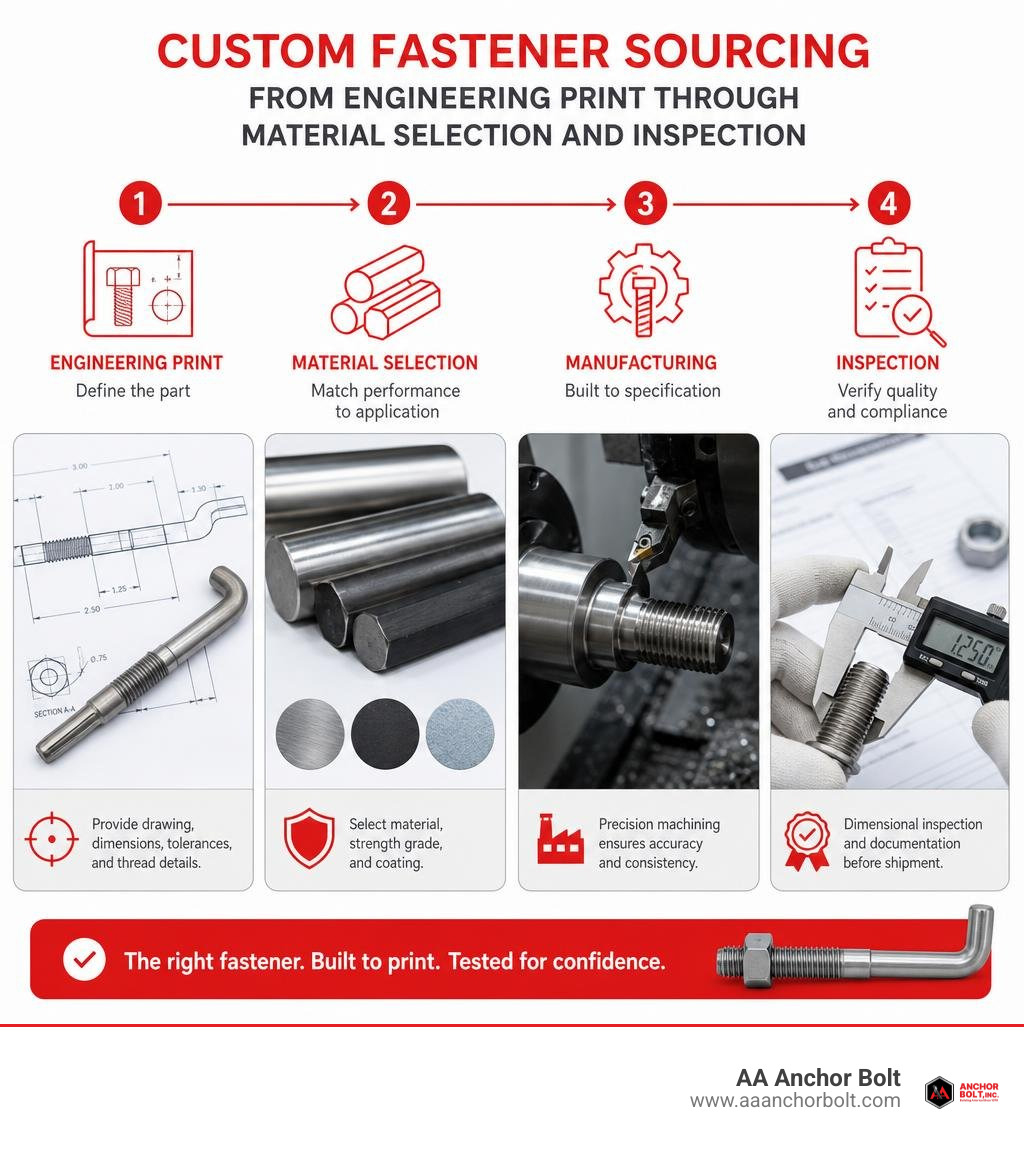
When sourcing a custom part, provide the manufacturer with:
- A PDF engineering drawing or STP/CAD file
- Required dimensions, tolerances, and thread details
- Material, strength grade, coating, and certification needs
- Quantity, delivery date, and job-site requirements
The benefit is simple: a properly specified fastener helps the assembly fit, carry its intended load, and hold up in its environment. Custom options can include studs, anchor bolts, shoulder screws, dowel pins, standoffs, captive screws, retainers, and other precision-turned parts. Material selection may also support high-strength needs, with specialty fastener tensile strengths ranging from roughly 170,000 psi to 310,000 psi where the design and application require it.
I am Pauline Horton, and this guide explains how to source custom fasteners without losing time, clarity, or confidence in the finished part.
Engineering Advantages of Custom Fasteners Over Standard Hardware
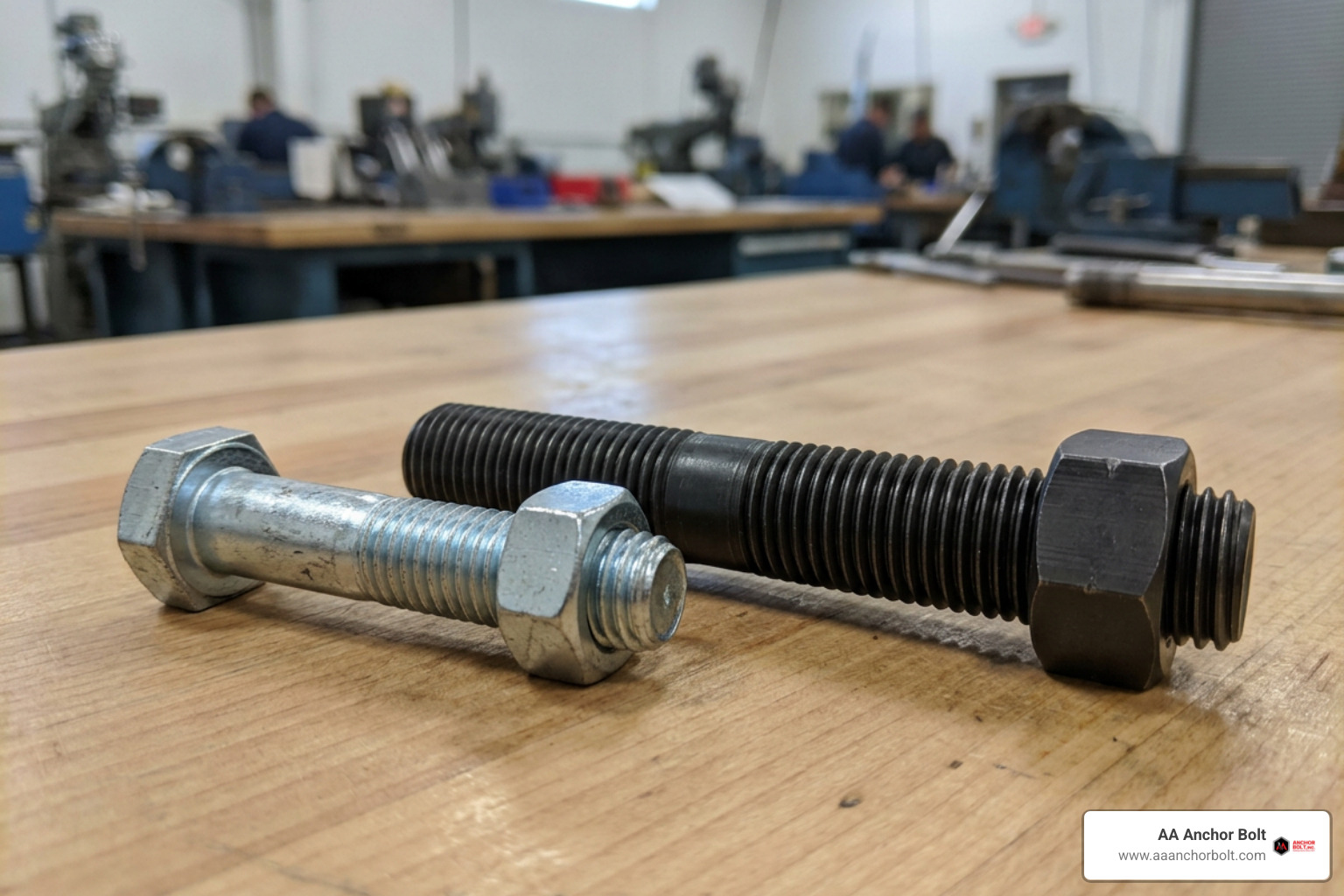
When an off-the-shelf bolt does not fit your assembly envelope, forcing standard hardware into an aggressive design is a fast route to mechanical failure. Standard catalog hardware is mass-produced around nominal dimensions and baseline material grades. This works well for general consumer assembly, but it quickly falls short when projects encounter tight space constraints, non-standard load paths, or extreme shear forces.
Custom engineering bypasses these limitations. Instead of redesigning an entire machine frame or structural footing to accommodate an off-the-shelf bolt, we manufacture the fastener around the exact geometry of your build. This eliminates unnecessary adapter plates, avoids awkward shimming, and maintains strict structural integrity under dynamic stresses.
| Metric / Parameter | Standard Off-the-Shelf Hardware | Custom Engineered Fasteners |
|---|---|---|
| Dimensional Flexibility | Rigid catalog lengths and thread pitches | Tailored thread engagement, shank lengths, and head shapes |
| Material & Tensile Range | Limited common grades (e.g., Grade 2/5/8, 304/316 SS) | Specialized alloys engineered from 170,000 to 310,000 psi |
| Weight Optimization | Standard solid profiles; excess material | Hollow shanks, custom undercuts, and engineered hex geometry |
| Traceability & Compliance | General commercial batch testing | Heat-specific mill certs, DFARS, ITAR, and AS9100D tracking |
| Corrosion Resistance | Standard light zinc plating or plain finish | Application-matched heavy galvanizing, PTFE, or passivation |
Superior Tensile Strength and Material Optimization
Demanding mechanical environments require fasteners that resist stretching, fatigue, and severe shock loads. Where standard structural hardware tops out, custom alloy steels provide the mechanical properties necessary to survive extreme stress cycles.
Using medium-carbon and alloy steels such as 8740 chrome moly, as well as proprietary ultra-high-strength formulations like ARP2000 or L19, fabricators can specify ultimate tensile strengths spanning 170,000 psi to 310,000 psi. These metallurgy profiles resist severe shear and yield deformation, making them essential for heavy-duty rigging and structural hardware as well as high-output powertrain applications. Optimizing the raw material also delivers predictable thermal tolerance, ensuring the fastener maintains its clamping force through extreme heat cycles without experiencing premature thread stripping or stress relaxation.
Solving Fit, Clearance, and Environmental Challenges
Engineering envelopes rarely offer infinite space. When designing electronic enclosures, aerospace brackets, or compact industrial mechanisms, every millimeter of bolt head clearance matters. Custom head geometries—such as low-profile sockets, specialized spline drives, and captive panel shoulders—allow engineers to trim excess mass while maintaining maximum drive torque.
Fastener design also plays a major role in environmental defense. Pairing mismatched metals invites galvanic corrosion, which degrades structural connections from the inside out. Custom material selection prevents this by matching the galvanic potential of the fastener directly to its mating component. Combined with high-vibration thread geometries—such as self-locking features, engineered interference fits, and prevailing-torque shanks—custom hardware ensures permanent mechanical stability even in high-rpm or heavy-vibration environments.
Common Configurations and Precision Component Types
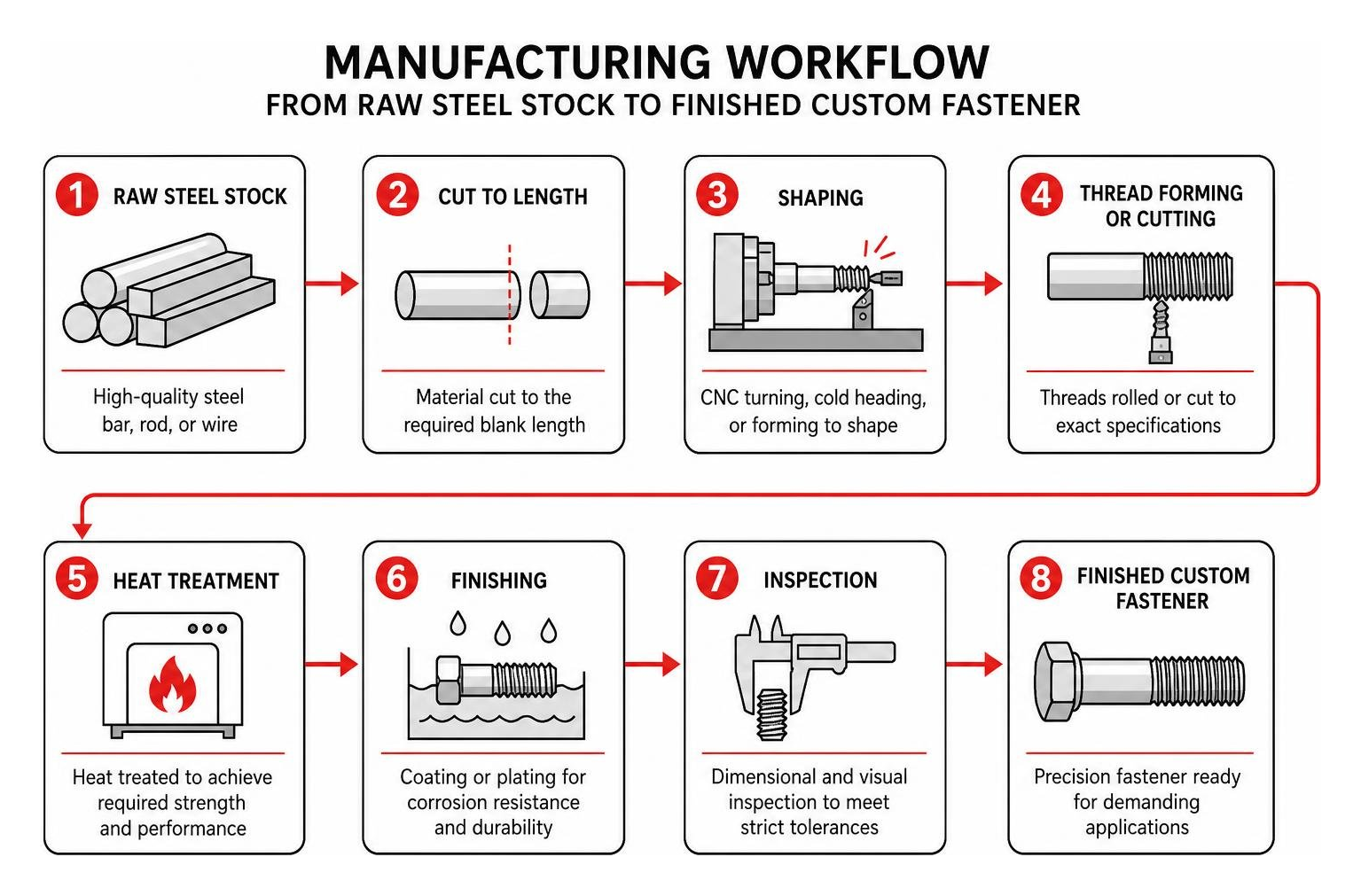
Custom fastener manufacturing utilizes several core production methodologies depending on the required tolerances, volume, and mechanical profiles. Precision CNC turning handles complex geometries, fine finishes, and low-to-medium run volumes. For massive structural projects, cold heading and thread rolling reshape the grain flow of the raw steel, significantly improving fatigue life compared to cut threads.
Types of Custom Fasteners for Critical Applications
Specialized industrial sectors rely on a diverse spectrum of turned and formed hardware to meet precise assembly requirements:
- Captive Screws & Panel Assemblies: Prevent loose hardware from dropping into sensitive electrical circuits or industrial machinery during field maintenance.
- Dowel Pins: Ground to micron-level tolerances for absolute alignment and shear transfer in precision dies and gearboxes.
- Shoulder Screws: Provide an accurate, unthreaded bearing surface for rotating components, linkage pivots, and spring-loaded assemblies.
- Standoffs & Spacers: Maintain exact circuit board separation and chassis clearances inside ruggedized electronics and imaging equipment.
- Thumb Screws & Knurled Hardware: Designed for tool-less access panels that require quick manual adjustments.
- Retainers & Custom Turned Components: Bespoke sleeves, bushings, and lock rings machined to unique prints for specialized OEM equipment.
Structural Anchorages and Heavy-Duty Threaded Hardware
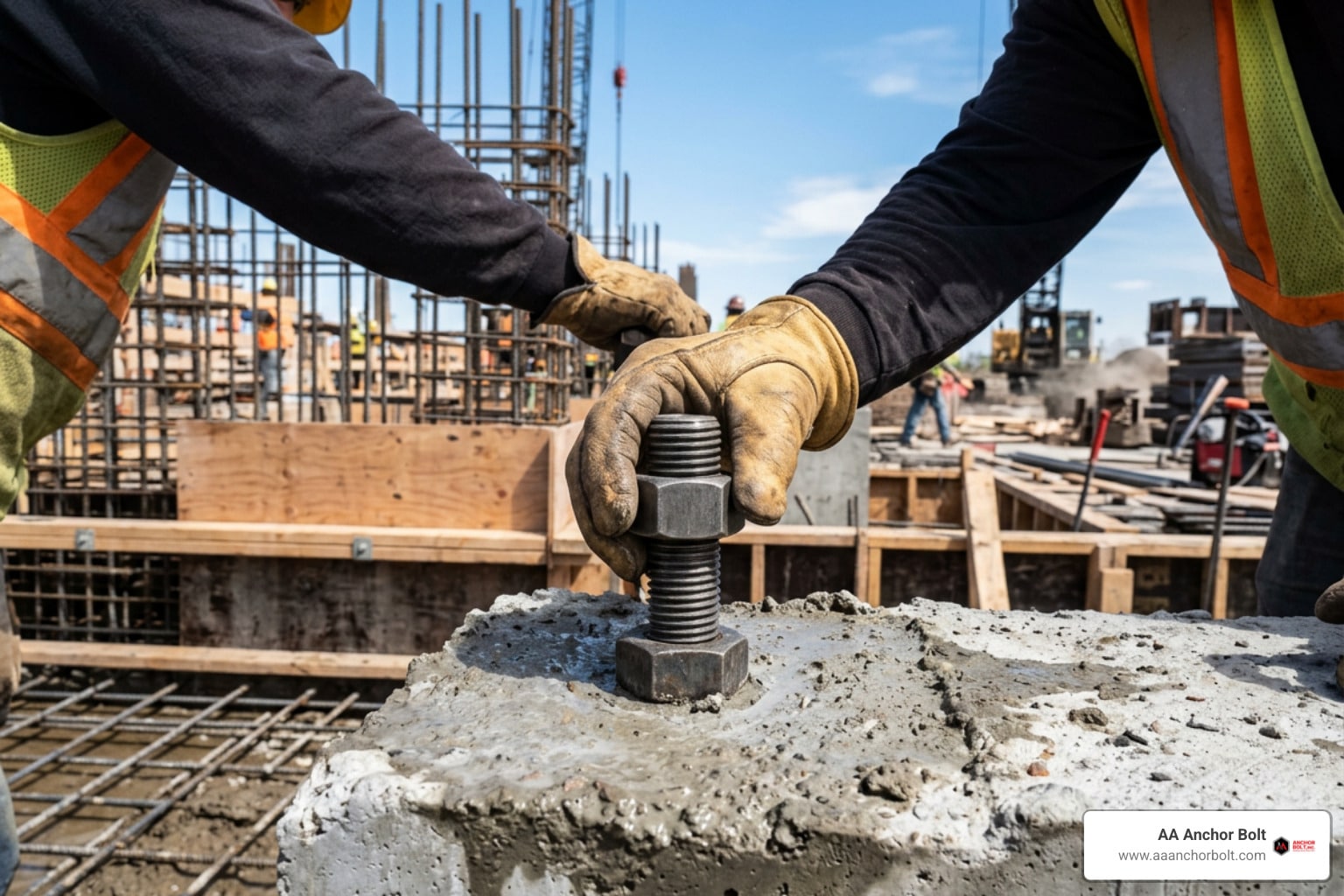
In heavy civil and industrial building construction, custom manufacturing usually takes the form of large-diameter structural bolts, heavy hex studs, and foundation tie-downs. Projects frequently encounter embedment depths or base plate configurations that cannot be served by stock bolts.
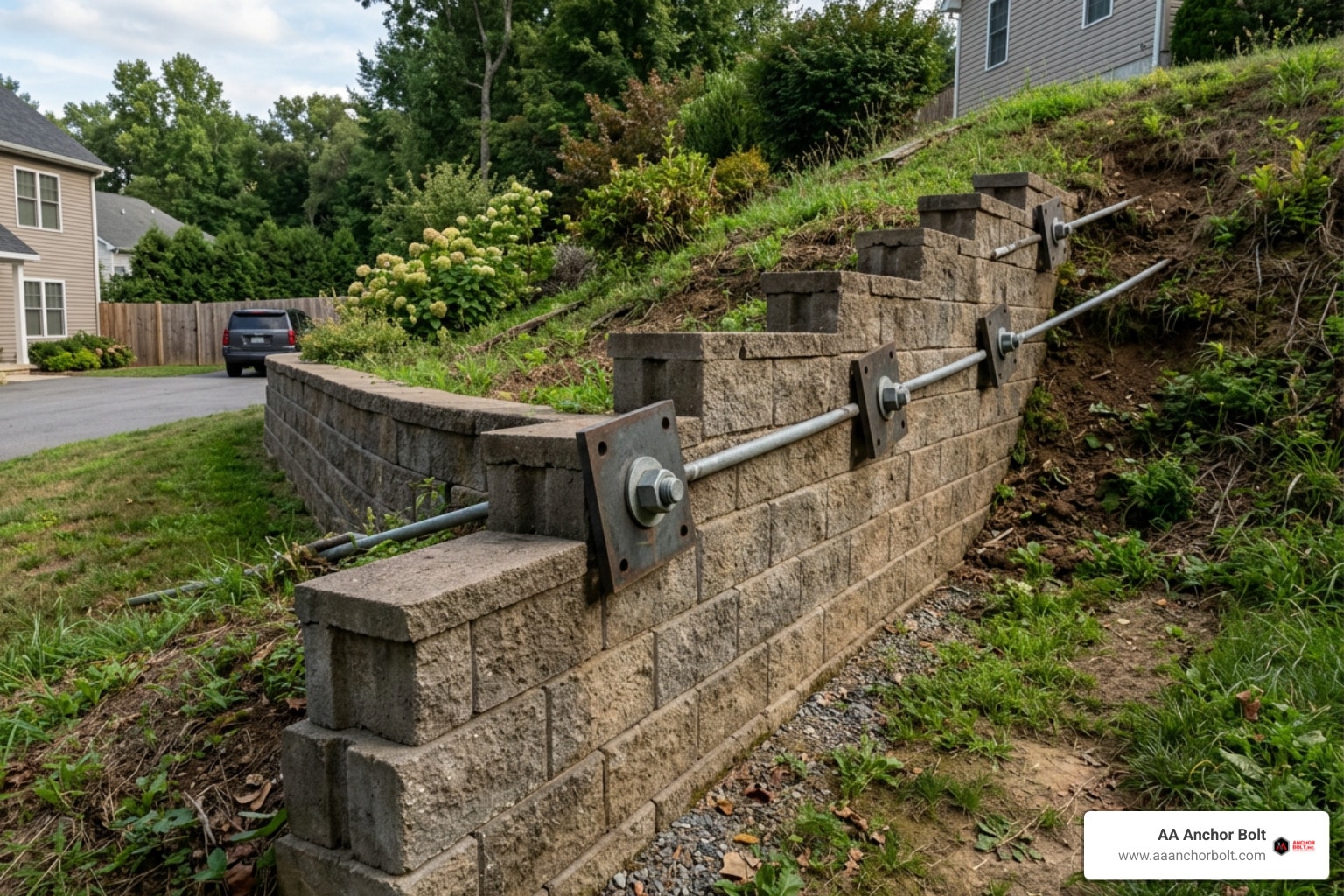
We manufacture heavy structural anchors with custom bend radiuses, extended thread lengths, and custom pitch diameters to fit non-standard embedment depths. These parts are built strictly according to project engineering drawings, including verified compliance with ASTM F1554 grades 36, 55, and 105 specifications. Tailoring the raw bar stock diameter, rolling clean Unified National (UNC/UNF) threads, and applying heavy protective coatings ensure these large-scale anchorages transfer shear and tensile uplift loads securely into deep concrete foundations.
Industry Standards, Compliance, and Material Certifications
A custom fastener is only as dependable as the documentation standing behind it. Critical industries cannot afford unknown metals or unverified heat treatments. Sourcing components through trusted domestic manufacturing channels helps ensure that physical parts arrive alongside verified chemical and mechanical test records.
Navigating AS9100D, ITAR, DFARS, and RoHS Standards
Depending on your operating sector, your custom hardware must clear strict regulatory and quality hurdles:
- AS9100D: The globally recognized quality management standard maintained by SAE International for the aviation, space, and defense sectors, establishing rigorous risk management and process control protocols.
- ITAR (International Traffic in Arms Regulations): Governs defense-related manufacturing, ensuring sensitive technical drawings and components remain within authorized domestic production channels.
- DFARS (Defense Federal Acquisition Regulation Supplement): Mandates that raw specialty metals used in defense components originate from domestic mills or qualifying countries.
- RoHS (Restriction of Hazardous Substances): Restricts dangerous elements like lead, cadmium, and hexavalent chromium in hardware destined for consumer electronics and medical imaging OEM devices.
Companies operating in aerospace, defense, and high-tech manufacturing frequently partner with certified domestic manufacturing specialists to maintain tight compliance with these regulatory standards.
Why Mill Certifications and Traceability Matter
Full traceability means every single bolt can be tied directly back to the original steel melt. When raw bar stock enters our manufacturing facility, it is assigned a heat number that tracks the exact chemical composition and mechanical properties of the steel.
Having comprehensive documentation protects your build from counterfeit materials and hidden metallurgical flaws. Sourcing parts backed by verifiable, certified strength and material test reports provides legal and engineering proof that your hardware meets specified yield strengths, reduction of area percentages, and elongation thresholds before it ever takes on a load.
Sourcing Workflow: From Engineering Prints to Production
Designing Custom Fasteners with STP Files and Engineering Prints
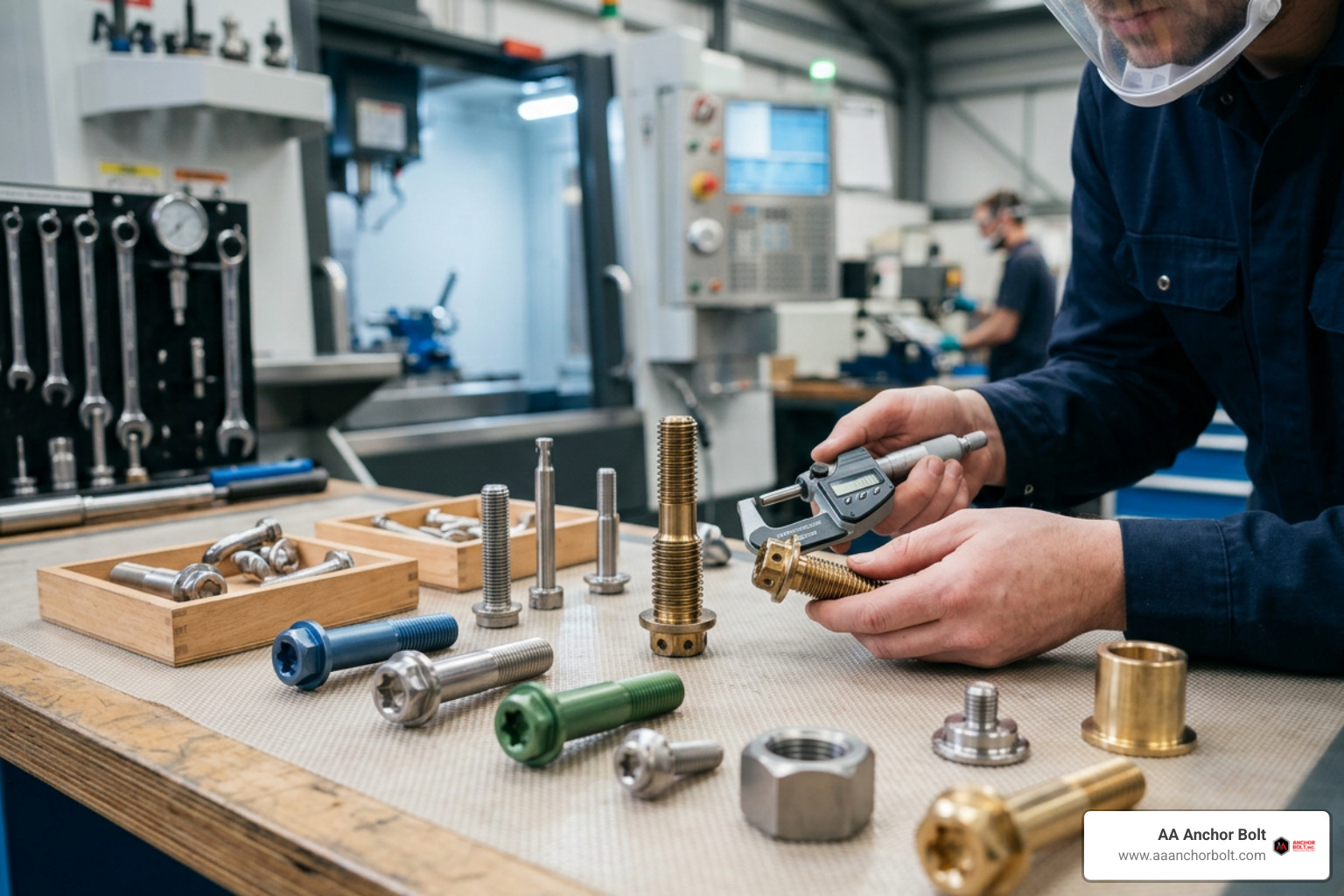
Turning a concept into a finished physical fastener begins with comprehensive 2D and 3D digital design assets. While a 2D PDF drawing communicates critical tolerances, surface finishes, and coating requirements, a 3D CAD model (typically delivered in an STP or STEP format) allows our machining software to generate tool paths with zero translation error.
When preparing your engineering package, clear Geometric Dimensioning and Tolerancing (GD&T) callouts are essential:
- Define Mating Tolerances: Specify critical runout, concentricity, and thread pitch classes (e.g., Class 2A/2B or Class 3A/3B for tight fits).
- Conduct Tolerance Stack-Up Analysis: Ensure the shoulder lengths, thread runouts, and head heights account for thermal expansion and coating buildup (such as hot-dip galvanizing or thick zinc platings).
- Specify Relief Grooves and Radii: Calling out generous radii under the fastener head prevents sharp stress risers where structural fractures most commonly originate.
Managing Lead Times, Short Runs, and Rapid RFQs
Standard lead times for custom machined hardware can stretch into months if a supplier lacks ready raw material. However, partnering with a domestic manufacturer equipped with on-site inventory changes the game. By maintaining expansive raw steel stocks, domestic shops can turn around prototype short runs and provide next-day quotes on RFQ packages.
Streamlining your design package expedites this quoting window. When submitting an RFQ, include your exact delivery schedule, target quantities, raw material grades, and coating needs up front. Working directly with specialized shops cuts out broker markups and shortens production lead times significantly, which is why finding reliable anchor bolt manufacturers with domestic manufacturing control is the most reliable way to keep mission-critical construction schedules on track.
Frequently Asked Questions About Custom Fastener Sourcing
What tensile strengths can custom fasteners achieve?
Depending on the chosen alloy and thermal heat-treatment process, custom fasteners can achieve tensile strengths ranging from standard structural thresholds (around 60,000 to 105,000 psi) all the way up to 170,000 to 310,000 psi. Alloys like 8740 chrome moly and specialized vacuum-melted steels provide these high ratings for extreme load environments like racing powertrains and aerospace assemblies.
What design files are required to submit a custom fastener RFQ?
The ideal RFQ package contains a 3D solid model (STP, STEP, or IGES) paired with a 2D engineering drawing in PDF format. The 2D print is critical because it explicitly defines thread pitch, dimensional tolerances, surface roughness, heat treatments, plating requirements, and required material certifications that 3D models alone do not convey.
Can manufacturers accommodate short-run prototype orders?
Yes. Custom manufacturers routinely produce short runs for engineering validation, physical load testing, and small-batch production machinery. CNC Swiss machining and precision turning centers make it easy to run quantities as small as a single prototype part or small pilot batches of 50 to 500 units before scaling into full production runs.
Conclusion
Custom fasteners are the unsung heroes of heavy industry, precision electronics, and critical infrastructure. When off-the-shelf catalog hardware cannot meet your dimensional clearances, load capacities, or regulatory requirements, engineered fasteners deliver the exact performance your project demands.
At AA Anchor Bolt, we leverage nearly a million pounds of domestic in-house steel inventory, full domestic production control, and decades of Michigan manufacturing experience to deliver high-performance hardware on rapid turnarounds. Whether your build demands customized anchor rods, non-standard threading, or heavy structural studs, explore our full catalog of custom industrial fasteners and structural hardware to get your next project built right and delivered on schedule.