Upgrade Your Rigging: Pick the Right Heavy Duty Fasteners
Choose Heavy Duty Fasteners by Load, Environment, and Installation Method
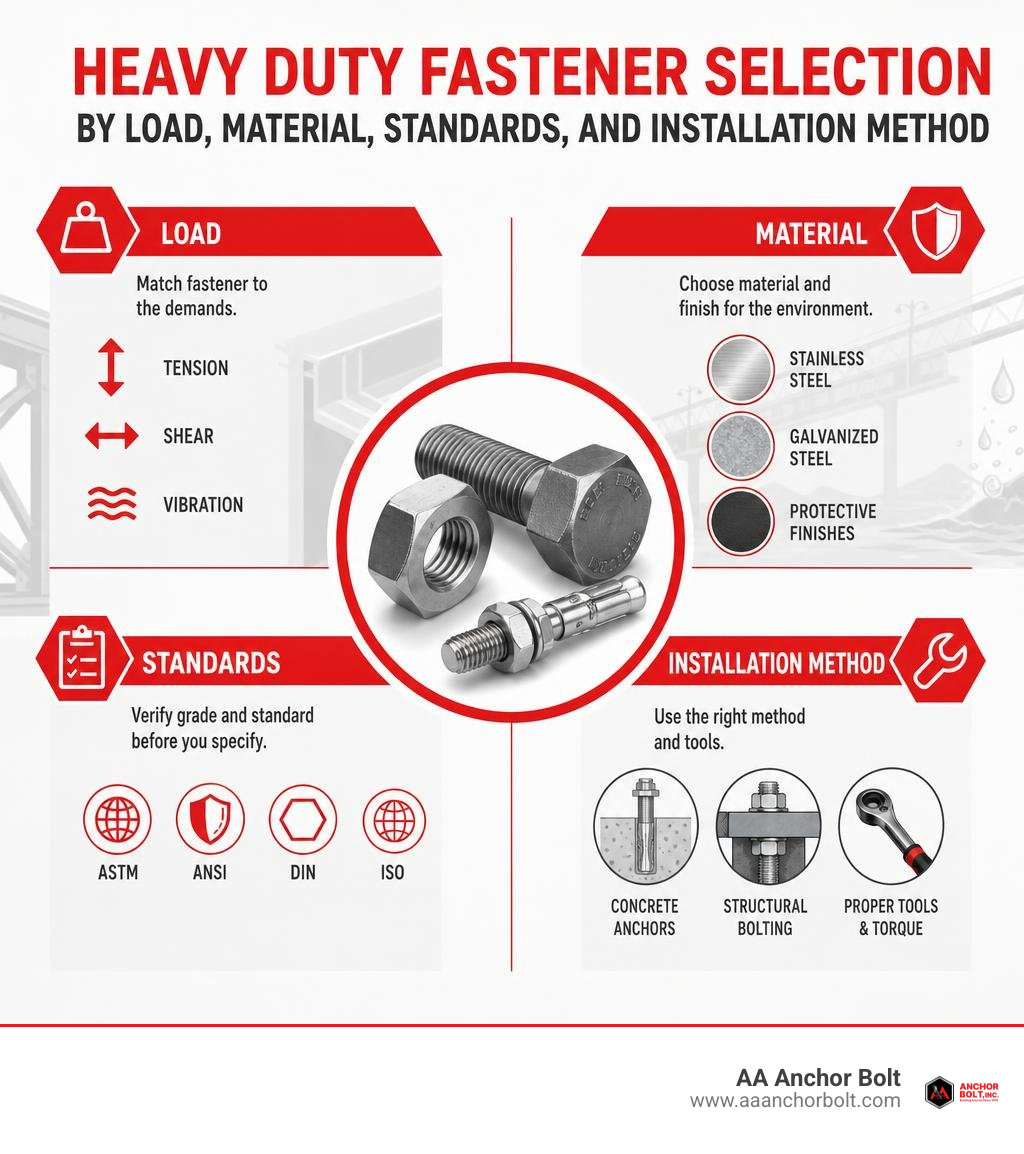
The right heavy duty fasteners depend on what they must hold, where they will operate, and how they will be installed. For structural rigging and infrastructure work, compare the fastener’s rated strength, material grade, corrosion protection, dimensions, and applicable standard before ordering.
- Choose heavy hex bolts and structural anchors for high-load steel, concrete, piping, and equipment connections.
- Choose stainless steel or galvanized finishes when moisture, road salt, chemicals, or outdoor exposure are concerns.
- Verify the exact grade and standard, such as ASTM, ANSI, DIN, or ISO, rather than relying on a generic “heavy duty” label.
- Treat packaging fasteners, tie-down straps, and structural bolts as separate product classes. Their load ratings and installation tools are not interchangeable.
A larger heavy hex head provides more bearing area than a standard hex head, helping distribute load and support better torque control. Common heavy hex sizes run from 1/4 inch to 2 inches in inch-series products and M5 to M52 in metric products, while stainless options may range from 80 to 95 ksi or 700 to 800 MPa depending on the governing grade.
I am Pauline Horton, and the comparisons ahead will help you match fastener capacity and finish to the job without slowing down your schedule.
Comparing Industrial Heavy Duty Fasteners by Capacity and Grade
Selecting the right hardware for structural rigging, heavy equipment anchoring, or material handling requires looking past marketing labels and evaluating true mechanical performance. In structural connections, fasteners must manage high static tension, dynamic vibration, and severe shear stresses without deforming or failing.

When establishing an anchor base, reviewing The Concrete Fastener Guide for Heavy-Duty Anchoring provides the foundational engineering principles needed to calculate embedment depths and tensile pull-out forces. Every fastener type serves a specific load tier, and matching that capacity to the physical stresses of the job keeps structures safe and projects on budget.
Heavy Hex Screws and Structural Anchors
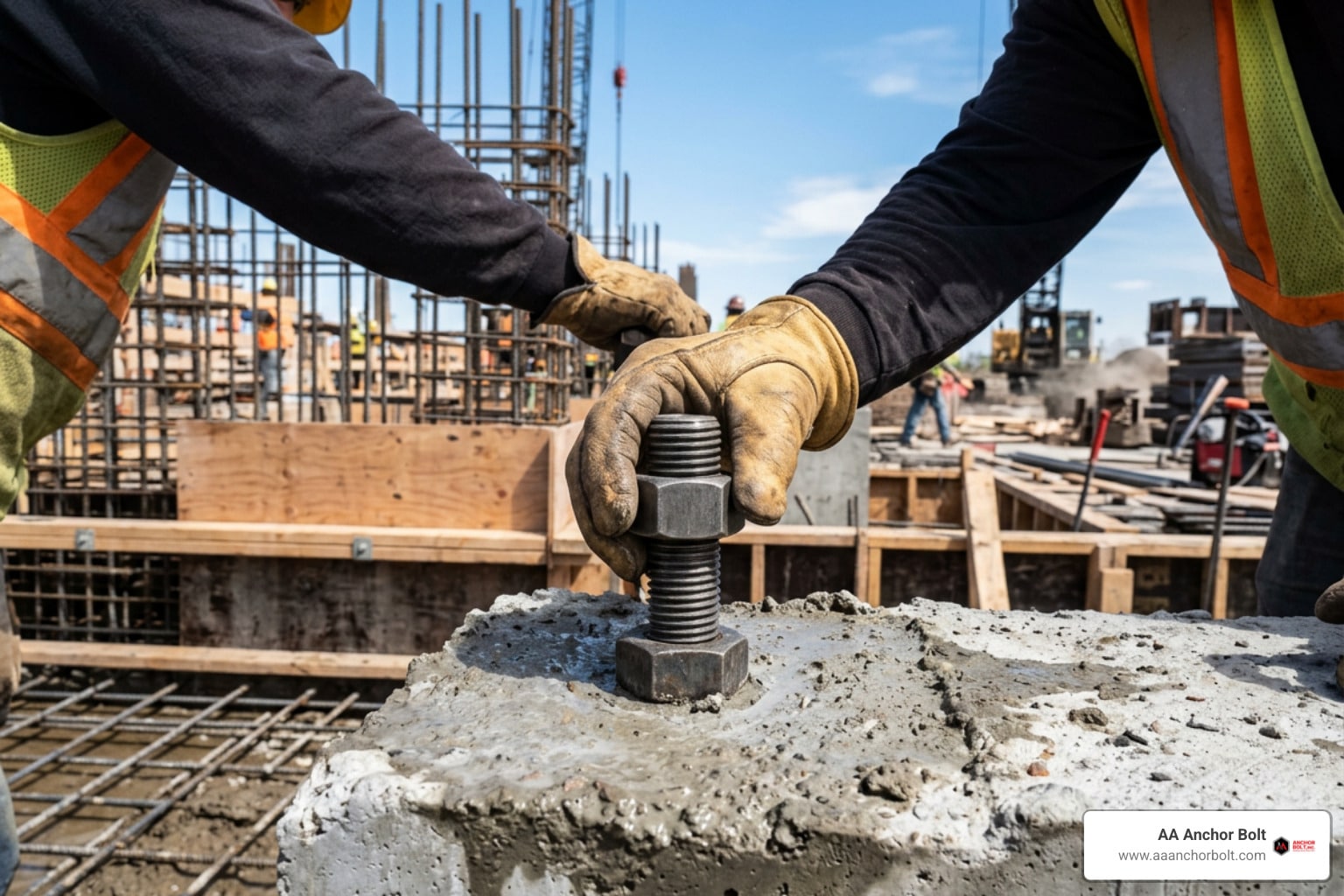
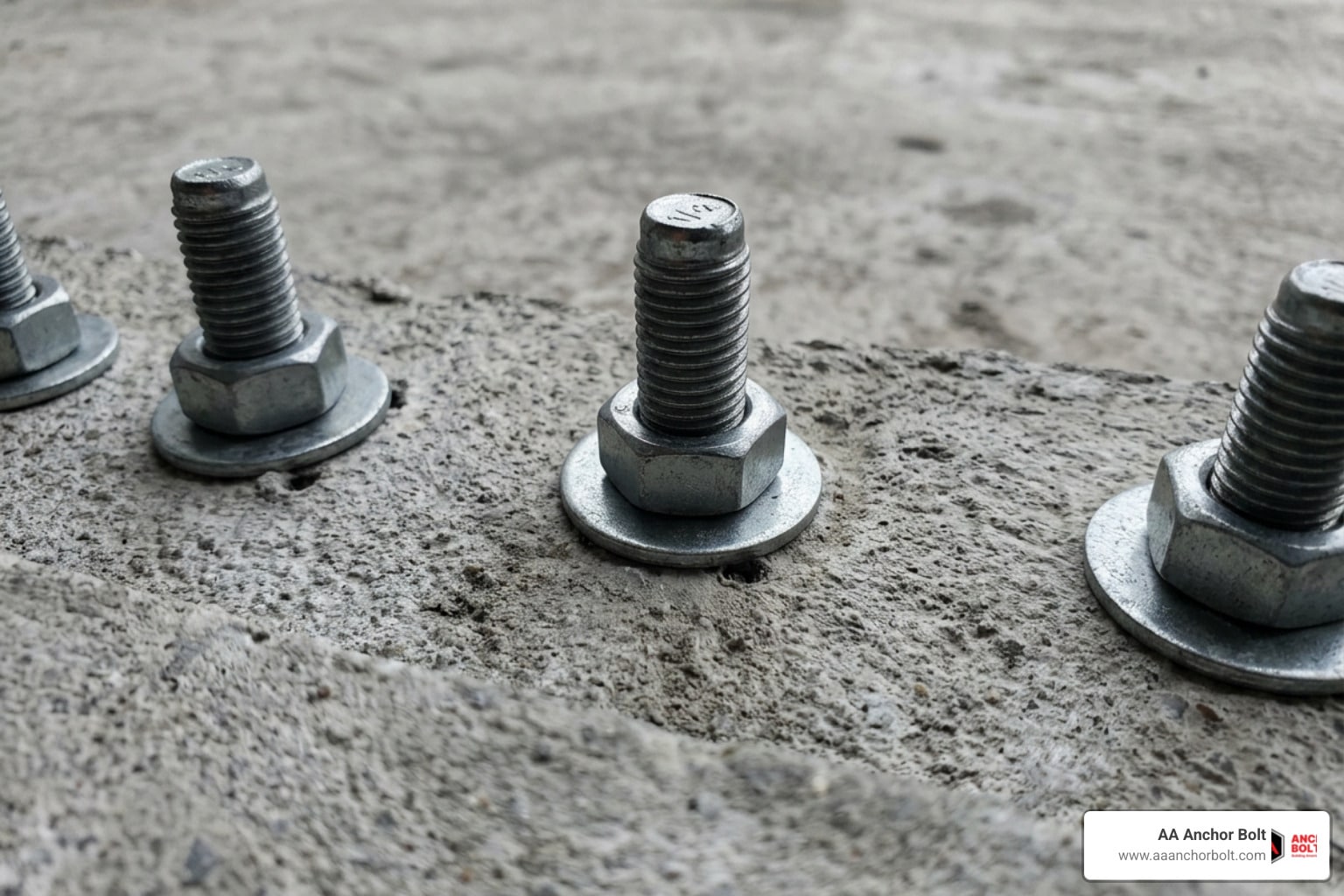
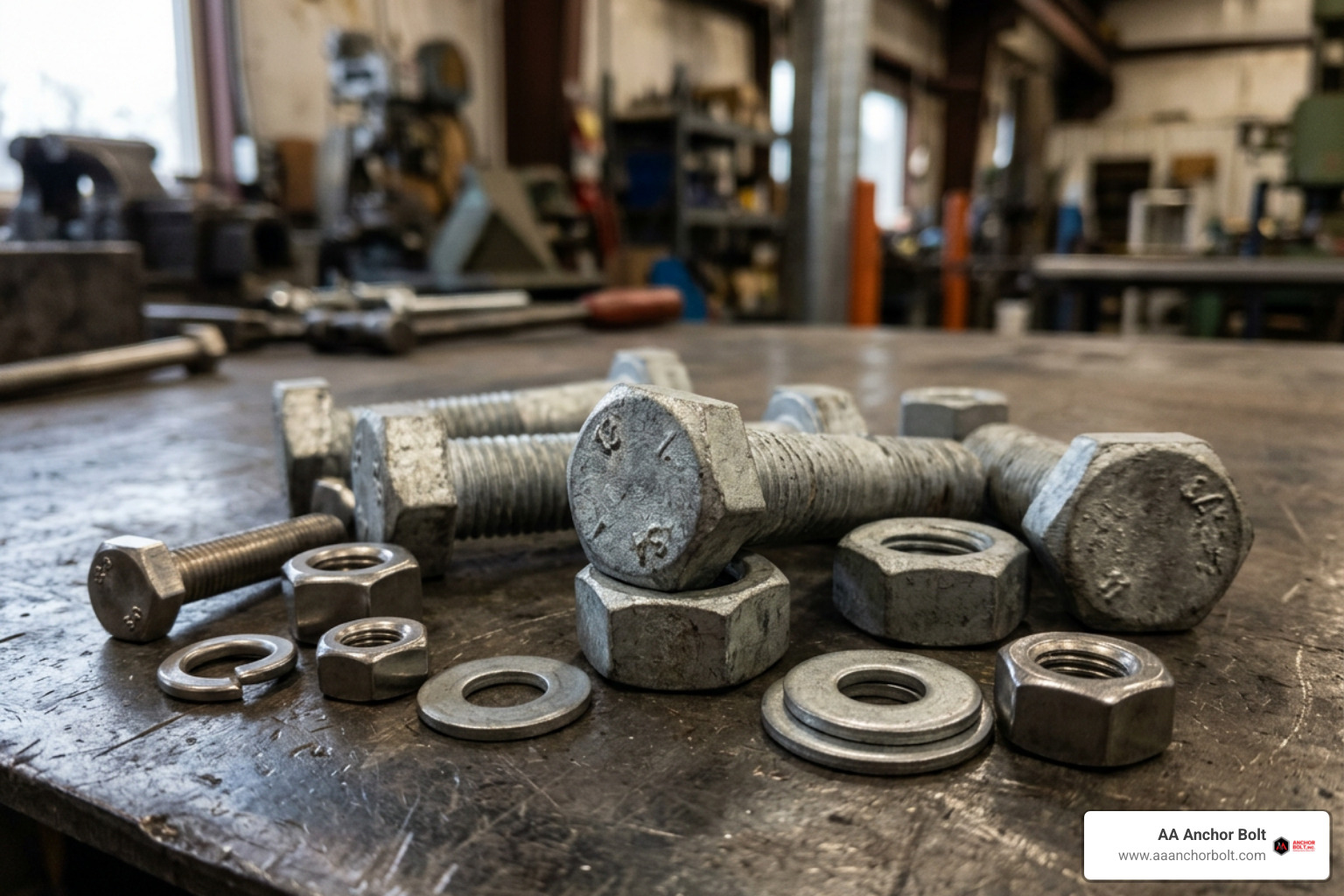
Heavy hex screws, heavy hex bolts, and specialized anchor systems form the structural backbone of heavy industrial rigging. Unlike standard hex bolts, a heavy hex screw or bolt utilizes a substantially wider head profile across the flats. This wider profile dramatically expands the bearing surface area beneath the head, dispersing clamping force across a broader section of the mating substrate to minimize surface crushing and optimize torque transmission.
When anchoring steel framework directly into cured concrete foundations, using deep-biting hardware like Hold On Tight With These Heavy-Duty 8 Inch Concrete Screw Anchors guarantees maximum mechanical interlocking. Structural engineers must also choose between full-thread and partial-thread bolts:
- Fully Threaded Screws (Tap Bolts): Threaded from the tip all the way to the underside of the head. Best suited for tapped holes and tension-dominant assemblies where grip length does not experience direct shear planes.
- Partially Threaded Bolts: Feature an unthreaded solid shank (body) beneath the head. The solid shank provides superior shear resistance in joint interfaces where slipping or side-loading occurs, such as flange connections and structural steel framing.
For masonry construction, knowing how to Lock Down Your Next Project With The Right Concrete Block Bolts ensures that hollow-core or grouted-cell walls achieve maximum structural hold without blowing out the masonry web.
Super Heavy Duty Fasteners vs Standard Rigging Straps
In manufacturing, rigging transport, and packaging logistics, terminology often overlaps between structural steel hardware, light-duty consumer strapping, and polymer micro-fasteners. Discerning the actual load boundaries prevents dangerous field mismatches:
- Super Heavy Duty Polymer Fasteners: Built for rugged packaging, heavy textile tagging, and industrial bundling. These nylon filaments deliver a nominal applied strength of 12 lbs (5.44 kg) per clip—making them nearly 50% stronger than standard lightweight retail fasteners. They withstand tough handling without snapping, yet are designed strictly for bundling and packaging retention rather than mechanical lifting.
- Heavy Duty Strapping Kits (300 lbs): Consumer and light-commercial tie-downs commonly feature 4 buckles and 2 straps, delivering a combined holding capacity rated around 300 lbs for securing cargo in transit or managing utility bundling.
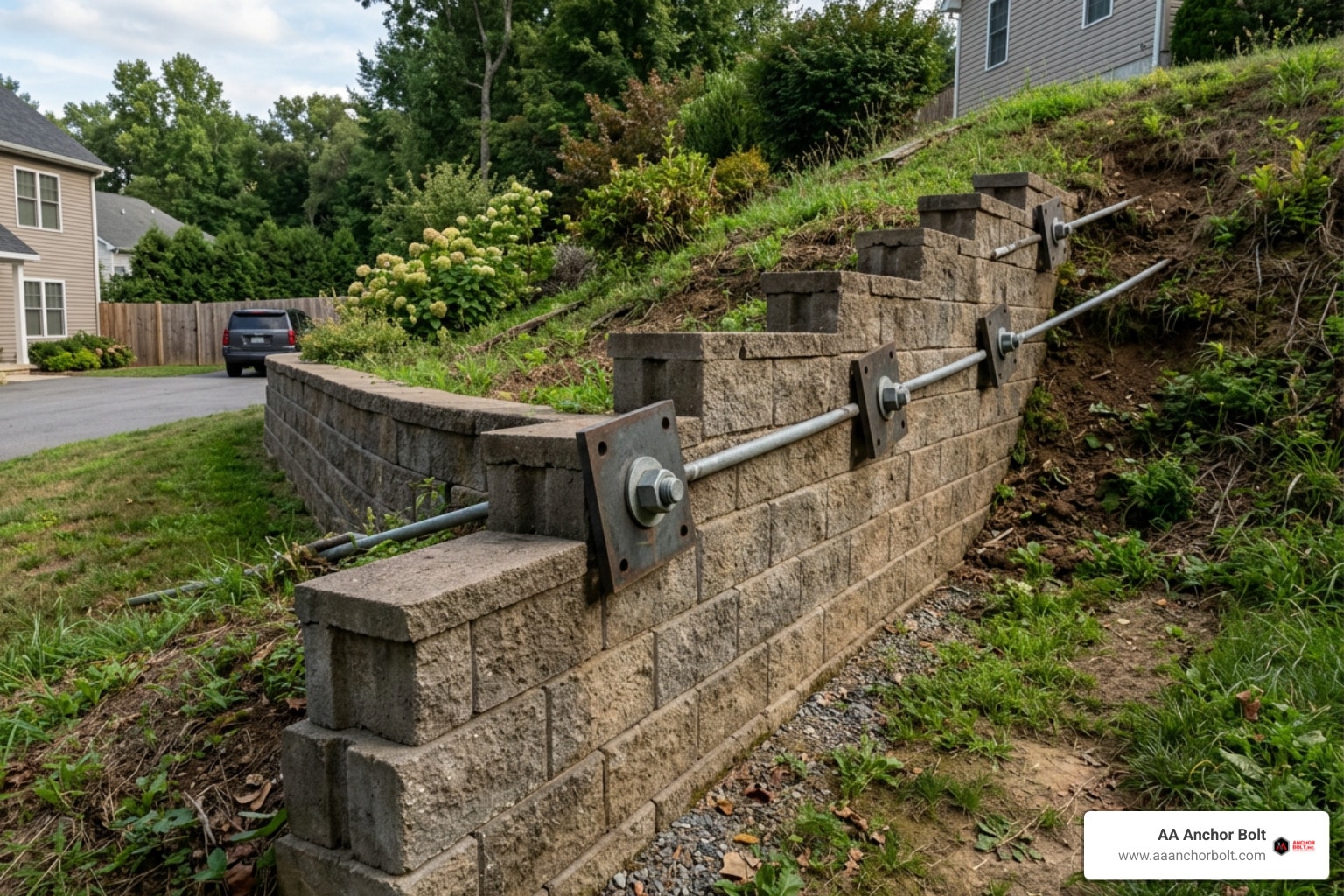
- Heavy Industrial Rigging Hardware: High-tensile steel U-bolts, anchor bolts, and threaded rod assemblies designed to hold thousands of pounds of static piping, structural columns, and dynamic crane loads. For severe process infrastructure, consulting The Ultimate Buyers Guide to Pipeline U-Bolt Clamps shows how high-strength steel clamp assemblies maintain structural integrity under intense thermal expansion and fluid vibration.

Dimensional and Mechanical Specifications Across Global Standards
Industrial projects require strict adherence to dimensional tolerances and mechanical property standards. Sourcing certified hardware from trusted Fasteners Suppliers & Manufacturers Serving Michigan ensures traceability and compliance with domestic building codes.
The table below outlines the governing standards, sizing parameters, and mechanical capacities comparing inch-series and metric-series heavy hardware:
| Standard / Specification | Measurement System | Thread / Configuration Type | Typical Size Range | Tensile Strength / Grade Rating | Primary Application |
|---|---|---|---|---|---|
| ANSI/ASME B18.2.1 | Inch (Imperial) | UNC / UNF Heavy Hex | 1/4″ to 2″ | 80 to 95+ ksi (ASTM F593) | Structural steel, flange joints, infrastructure |
| DIN 931 / ISO 4014 | Metric | Metric Coarse / Fine (Partial Thread) | M5 to M52 | 700 to 800 MPa (A2-70, A4-80) | Heavy machinery, processing plants, marine |
| DIN 933 / ISO 4017 | Metric | Metric Coarse / Fine (Full Thread) | M5 to M52 | 700 to 800 MPa (Class 8.8, A4-70) | Tapped heavy equipment mounting, structural joints |
| ASTM F593 (SS) | Inch (Imperial) | Unified National Standard | 1/4″ to 1-1/2″+ | 80 to 95 ksi (Grades C, D, G, H) | Corrosive chemical handling, coastal rigging |
| ISO 3506-1 (SS) | Metric | Metric ISO Thread | M5 to M39+ | 700 to 800 MPa (Property Classes 70/80) | Marine engineering, water treatment infrastructure |
Sizing Ranges, Thread Types, and Tensile Ratings
Heavy hex screws and bolts span an extensive dimensional envelope. In imperial measurements, diameters range from 1/4″ up to 2″, accommodating everything from secondary equipment mounting to primary foundation hold-downs. In metric series, standard sizing spans M5 to M52.
When extreme tensile loads demand custom steel fabrication, utilizing Industrial Rebar Threading Solutions for Maximum Tensile Strength ensures that concrete-embedded rods transfer mechanical loads directly into the bedrock without stripping the thread pitch under stress.
For stainless steel heavy hex fasteners, mechanical properties are governed by standards like ASTM F593 (inch) and ISO 3506-1 (metric):
- Inch Series Tensile Performance: ASTM F593 stainless fasteners typically deliver tensile strengths between 80 and 95 ksi. Grades F593 C (Type 304) and F593 G (Type 316) require a minimum tensile strength of 95 ksi. In larger diameters or alternate heat-treat conditions, Grades F593 D (Type 304) and F593 H (Type 316) are rated to a minimum tensile strength of 80 ksi.
- Metric Series Tensile Performance: Metric stainless fasteners evaluated under ISO 3506-1 typically fall into property classes 70 and 80 (such as A2-70, A2-80, A4-70, and A4-80), providing tensile strengths ranging from 700 to 800 MPa.
Material Selection and Corrosion Protection for Heavy Duty Fasteners
Selecting the right alloy and surface treatment prevents premature structural failure caused by galvanic corrosion, stress-corrosion cracking, or atmospheric oxidation.
- Stainless Steel 304 (A2): The industry workhorse for general-purpose corrosion resistance. Excellent for indoor industrial facilities, washdown environments, and standard atmospheric outdoor exposure.
- Stainless Steel 316 / 316L (A4): Formulated with 2% to 3% molybdenum, SS 316 provides superior protection against chlorides, sea spray, industrial acids, and chemical vapor pitting. It is the premier choice for marine docks, offshore rigging, and wastewater facilities.
- Hot-Dip Galvanizing (HDW) & Carbon Alloys: For heavy structural steel framing, hot-dip galvanized carbon and alloy steels provide sacrificial zinc coatings that protect structural steel against harsh outdoor weather for decades.
In high-density industrial server environments or telecommunication towers, choosing a specialized U-Bolt for Data Heavy-Duty Mounts for Your Precious Tech ensures clean cable routing and structural equipment security without risking zinc flaking or galvanic degradation near sensitive electronics.
Packaging, Tool Compatibility, and Installation Efficiency
Optimizing installation speed requires pairing the right packaging formats with ergonomic, heavy-duty installation tooling. Whether handling high-speed tagging lines or heavy steel bolting crews, efficiency on the floor directly impacts project labor costs.
Clip vs Bulk Loading Formats
The delivery format of fasteners dictates workflow efficiency:
- Clip Formats (50 Fasteners per Clip): Common in polymer fasteners and specialized packaging applications. Clips fit into mechanical hand guns and pneumatic tools, preventing tangling and ensuring rapid, continuous firing. Packaged in boxes of 5,000 (5M) and master cases of 50,000 (50M), these formats streamline inventory tracking on busy production lines.
- Bulk Kegs and Palletized Crates: Structural heavy hex bolts, nuts, and washers arrive in bulk industrial kegs or wire-bound wooden crates. Bulk staging allows structural ironworkers to pull hardware directly into rigging pouches for high-elevation joint assembly.
Tool Selection and Proper Torque Application
Using undersized or incompatible installation tools causes equipment jams, broken needles, stripped drive heads, or under-torqued connections:
- Packaging Tooling: Super Heavy Duty polymer fasteners require dedicated heavy-duty pistol tools, such as the Super Heavy Duty Long Needle Pistol Tool, Mark III Standard Pistol Tool, or Extra Heavy Duty Hand Tools. These tools utilize heavy-gauge, reinforced needles capable of piercing dense packaging, canvas, and heavy carpeting without bending.
- Structural Bolting Tooling: Structural heavy hex fasteners require calibrated manual torque wrenches, pneumatic impact guns, or hydraulic torque tensioners. Because heavy hex heads provide an enlarged bearing area, applying the proper torque value ensures the joint reaches its specified clamping preload without galling the threads or over-stressing the mating surfaces.
Frequently Asked Questions About Industrial Fasteners
How much stronger are Super Heavy Duty Fasteners compared to standard options?
Super Heavy Duty polymer fasteners are nearly 50% stronger than standard heavy-duty packaging fasteners. They feature a nominal applied strength of 12 lbs (5.44 kg) per clip, utilizing reinforced nylon filaments designed to hold dense, abrasive, or heavy substrates together without snapping during transit.
What is the primary advantage of a heavy hex bolt over a standard hex bolt?
The primary advantage is the enlarged head profile across the flats and corners. This design increases the bearing surface area under the bolt head, which distributes heavy clamping loads across a wider surface area. This prevents damage to the connected material and provides superior grip and torque control during high-tension tightening.
How do ASTM F593 tensile requirements differ across stainless steel grades?
ASTM F593 establishes minimum tensile strength requirements based on alloy classification and condition. Stainless steel Grades F593 C (Type 304) and F593 G (Type 316) require a minimum tensile strength of 95 ksi. For fasteners in alternate conditions or larger diameter categories, Grades F593 D (Type 304) and F593 H (Type 316) require a minimum tensile strength of 80 ksi.
Conclusion
Securing heavy industrial infrastructure, structural steel frameworks, and critical rigging demands hardware engineered to uncompromising standards. Whether your project calls for 316 stainless steel heavy hex bolts rated up to 95 ksi, deep-embedment foundation anchors, or heavy-duty U-bolts, verifying the mechanical rating, dimensions, and coating ensures lasting structural integrity.
As a Michigan-based, family-owned manufacturer operating from Northville, MI, AA Anchor Bolt maintains full domestic production control with nearly a million pounds of in-house steel inventory. When your construction or infrastructure schedule cannot afford delays, we deliver custom anchor bolts and specialty structural fasteners with industry-leading turnaround times.
Explore our full line of custom Products or contact our engineering team today to build the exact fastening solutions your next project requires.