How to Choose and Use Hot Dipped Galvanized Anchor Bolts
Why Hot Dipped Galvanized Anchor Bolts Are the Go-To Choice for Structural Projects
Hot dipped galvanized anchor bolts are steel anchor bolts coated in molten zinc to protect against rust, corrosion, and long-term weather exposure — making them the standard choice for outdoor structural connections.
Quick answer: What you need to know
- What they are: Steel bolts (typically ASTM F1554) dipped in molten zinc at ~840°F to create a permanent, bonded coating
- Why use them: The zinc coating provides 30+ years of corrosion resistance in harsh or outdoor environments
- Common uses: Securing steel columns, light poles, sign bases, and equipment to concrete foundations
- Key spec: Most structural applications call for ASTM F1554 Grade 55, hot-dip galvanized finish per ASTM F2329
- Sizes available: Standard diameters from 1/2″ to 1-1/2″, with custom fabrication up to 4″ diameter
- Configurations: J-bolts, L-bolts, straight bolts, headed bolts, and pre-assembled styles
If you’re a contractor working on infrastructure, bridges, commercial buildings, or any outdoor structure — choosing the right galvanized anchor bolt upfront saves you from costly corrosion failures down the road.
The challenge is that not all galvanized bolts are equal. The galvanizing process, coating thickness, thread handling, and ASTM grade all affect how the bolt performs over its service life. Get any of those wrong and you risk premature corrosion, failed inspections, or structural compromise.
This guide walks you through everything you need to know — from how the galvanizing process works to how to source and install the right bolt for your project.
What Are Hot Dipped Galvanized Anchor Bolts?
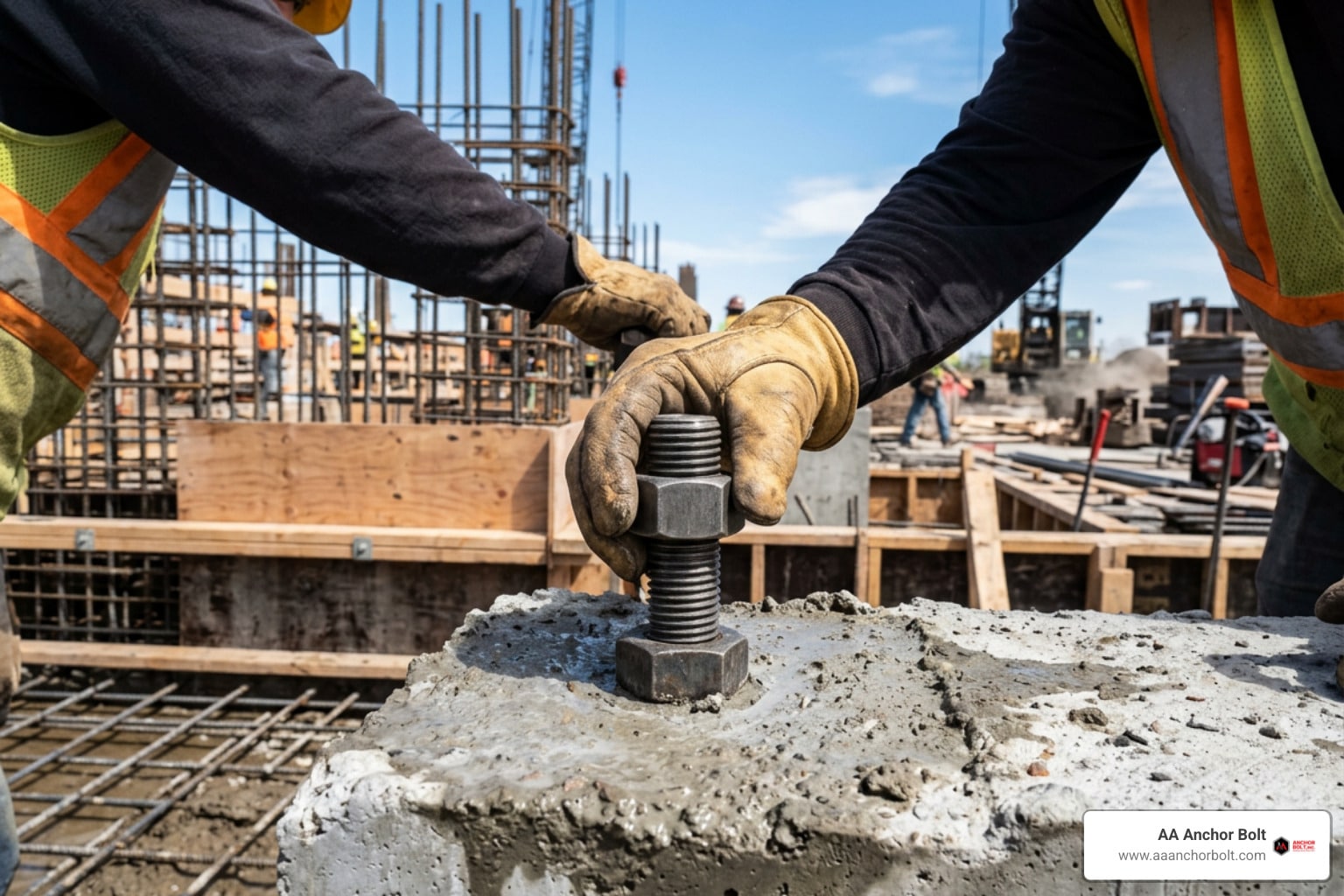
At their core, anchor bolts are the unsung heroes of structural engineering. They serve as the critical physical link transferring loads from a superstructure—like a steel building column, highway sign, or heavy industrial machine—directly into a concrete foundation. Because these connections are so vital to the structural integrity of a building, any compromise in the bolt can lead to catastrophic failure.
When steel is exposed to moisture, oxygen, and environmental pollutants, it begins to rust. This is where hot dipped galvanized anchor bolts step in. Unlike standard carbon steel bolts that are left “plain” or “black,” galvanized bolts undergo a specialized thermal dipping process that coats the entire fastener in a protective layer of zinc.
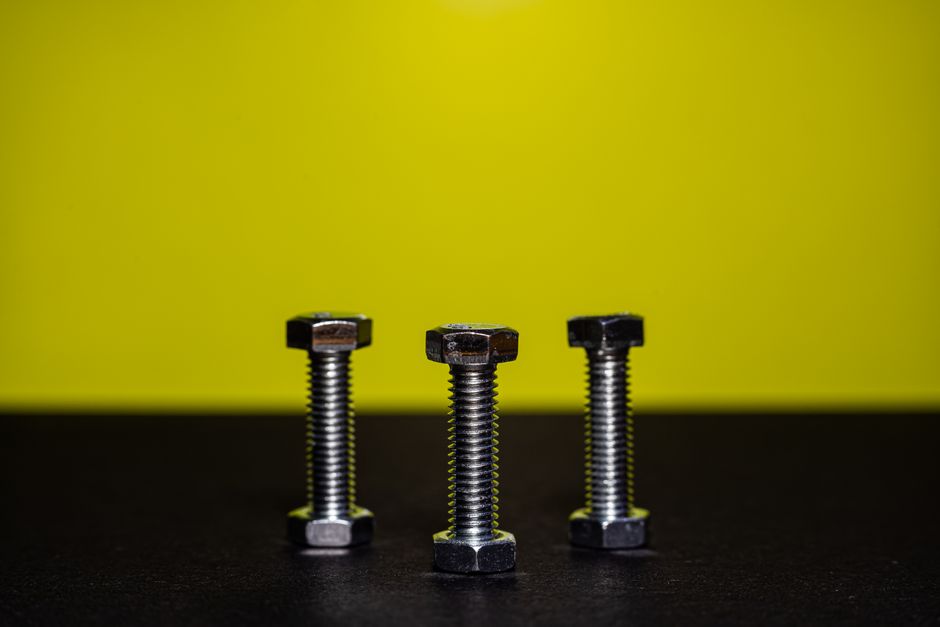
This zinc coating is not just a superficial paint job. During the dipping process, the molten zinc reacts chemically with the iron in the steel. This reaction creates a series of iron-zinc alloy layers—historically referred to as the gamma, delta, and zeta layers—topped by a pure outer zinc layer. This metallurgical bond becomes an inseparable part of the steel itself.
The resulting coating is incredibly tough, boasting a typical thickness of 2 to 6 mils (thousandths of an inch). This thick barrier provides dual-action protection:
- Barrier Protection: It physically blocks moisture, salt, and corrosive chemicals from reaching the underlying steel.
- Sacrificial Protection: If the bolt is scratched or dented during installation, the surrounding zinc will actively sacrifice itself to corrode first, shielding the exposed steel from rusting.
Because of this robust chemical defense system, hot-dip galvanized (HDG) anchor bolts boast an expected service life of more than 30 years in highly corrosive outdoor environments.
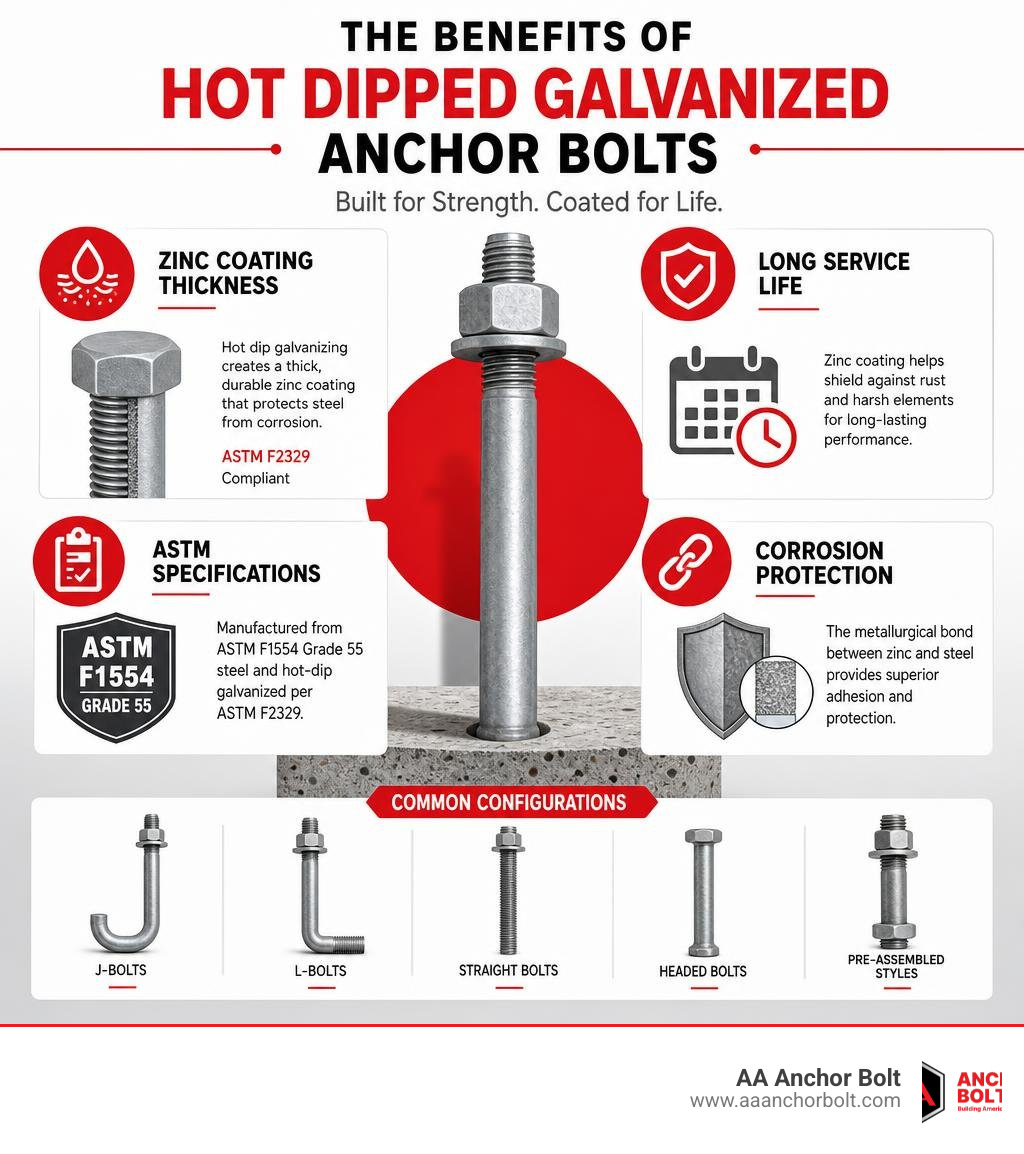
Common Configurations: J-Bolts, L-Bolts, and Straight Bolts
Anchor bolts are not a one-size-fits-all product. Depending on the engineering requirements of your foundation, the physical shape of the anchor must change to maximize pull-out resistance and load distribution. Here are the most common configurations we manufacture and supply:
- L-Bolts (or Bent Anchor Bolts): Shaped like the letter “L,” these are some of the most widely used concrete anchors. The bent leg at the bottom hooks into the concrete, providing excellent resistance against tension forces trying to pull the bolt straight out. You will frequently see options like 3/4″-10 x 15″ L-bolts used in light pole bases, standard commercial columns, and heavy machinery foundations.
- J-Bolts: Similar to L-bolts, but with a more pronounced hook at the bottom. The hook wraps slightly upward, offering a different style of mechanical interlock within the cured concrete.
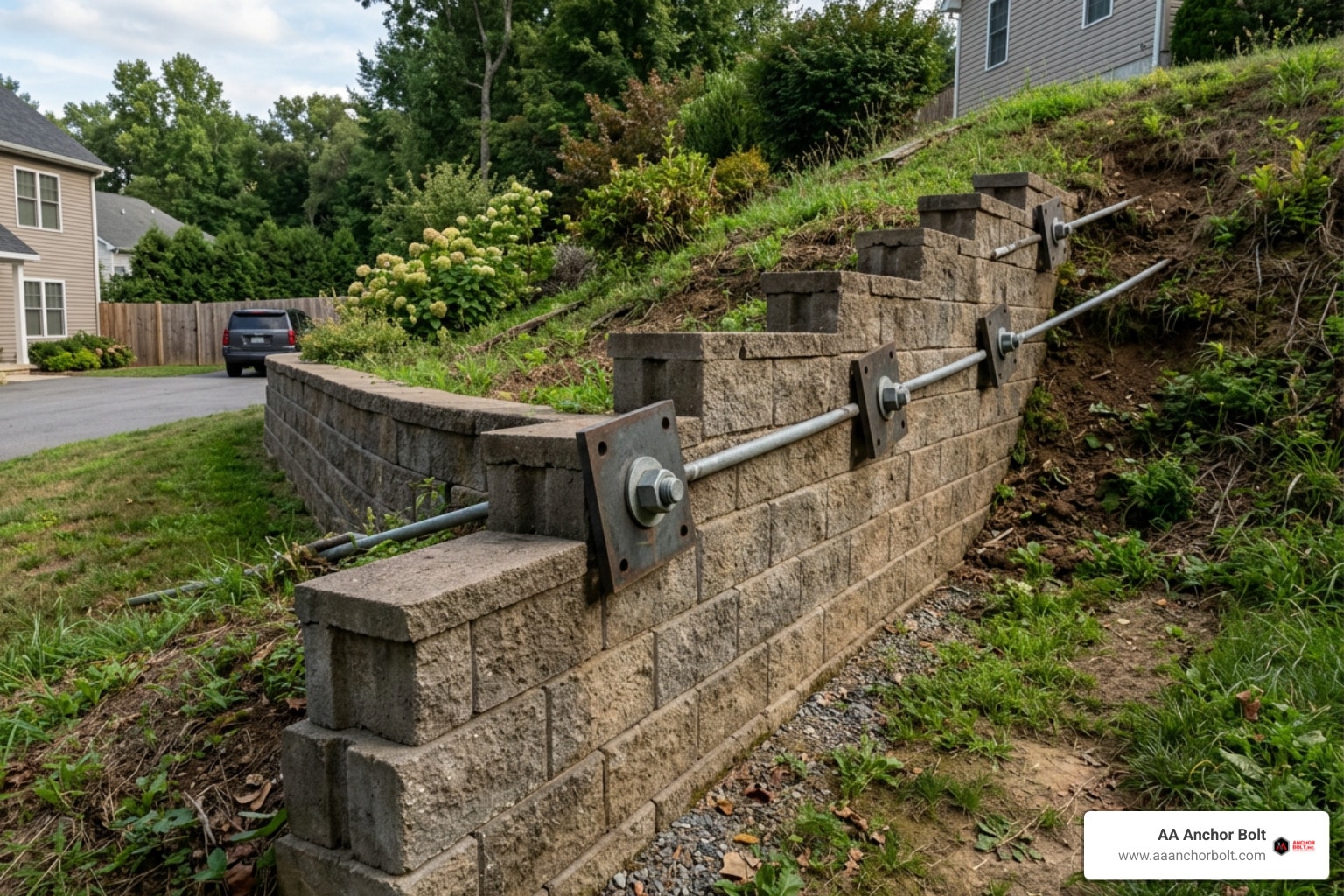
- Straight Anchor Bolts: These are straight rods threaded on both ends or threaded on one end with a nut and washer configuration at the embedded end. They rely on the bond between the steel and concrete, or more commonly, a heavy hex nut and plate washer secured to the bottom of the rod to prevent pull-out. These are standard options for applications like high-tension shearwalls or rod systems.
- Headed Anchor Bolts: These straight bolts feature a forged heavy hex head or square head at the bottom end. When embedded in concrete, the head acts as a built-in anchor plate, distributing the tension load across a wider area of concrete.
- Pre-Assembled Anchor Bolts: To save contractors valuable time on-site, pre-assembled options package the anchor bolt with a heavy plate washer sandwiched between two fixed hex nuts at the embedded end, complete with the top nut and washer ready to secure.
ASTM Specifications for Hot Dipped Galvanized Anchor Bolts
When specifying anchor bolts for structural steel-to-concrete fastening, engineers rely on standardized ASTM specifications to guarantee chemical, physical, and mechanical performance. The primary standard governing these fasteners is ASTM F1554.
For a comprehensive breakdown of this standard, you can refer to our F1554 Anchor Bolt Overview. The F1554 specification covers three distinct grades of steel, each tailored to specific load-bearing requirements:
- Grade 36: This grade is manufactured from low-carbon steel, offering a minimum yield strength of 36 ksi. It is highly weldable, cost-effective, and perfect for light-duty applications such as residential sill plates or light poles. Read more in our guide to F1554 Anchor Bolt Grade 36.
- Grade 55: Offering a minimum yield strength of 55 ksi, Grade 55 is the true workhorse of the structural steel industry. It strikes the perfect balance between high strength and ductility, making it the default choice for building columns, highway signage, and heavy industrial structures. We manufacture these regularly to ensure compliance. You can learn more about this grade here: F1554 Anchor Bolt Grade 55.
- Grade 105: This is a high-strength, heat-treated alloy steel boasting a minimum yield strength of 105 ksi. It is designed for extreme load applications, high-tension shearwalls, and seismic zones where structural performance is non-negotiable. Learn more about our high-strength capabilities here: F1554 Anchor Bolt Grade 105.
All three grades of F1554 can be hot-dip galvanized. However, the galvanizing process must comply strictly with ASTM F2329, which specifically regulates hot-dip zinc coatings applied to threaded fasteners, nuts, and washers.
The Hot-Dip Galvanizing Process and Thread Challenges
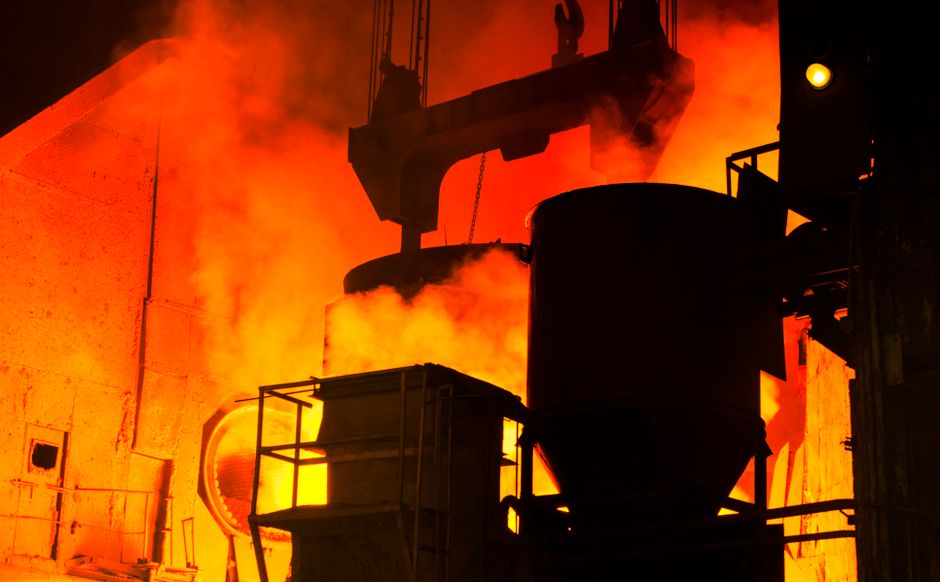
How does a raw steel rod transform into a corrosion-resistant powerhouse? The hot-dip galvanizing process is a highly controlled sequence of chemical and thermal steps designed to prepare the steel and bond the zinc perfectly.
The Step-by-Step Galvanizing Sequence
- Wheelabrating (Mechanical Cleaning): Before any chemical treatment, the raw steel anchor bolts are shot-blasted to strip away heavy mill scale, rust, and physical surface contaminants.
- Caustic Cleaning (Degreasing): The bolts are submerged in an alkaline caustic soda bath to dissolve organic contaminants like manufacturing oils, grease, and drawing lubricants.
- Acid Pickling: Next, the steel is lowered into an acid bath (typically sulfuric or hydrochloric acid) to etch the surface and remove any remaining light scale or oxides, leaving behind chemically clean steel.
- Fluxing: The bolts are dipped in a liquid flux solution (usually zinc ammonium chloride). This prevents any new oxides from forming on the clean steel before dipping and helps the molten zinc wet and bond to the steel surface.
- Molten Zinc Submersion: The prepared anchor bolts are submerged in a kettle of molten zinc maintained at approximately 840°F (450°C). They remain in the bath for 2 to 4 minutes, allowing the zinc-iron metallurgical reaction to take place.
- Centrifuge Spinning: This is the most critical step for threaded fasteners. While the zinc is still in a liquid state, the bolts are loaded into a specialized centrifuge system and spun rapidly. This centrifugal force flings excess zinc out of the threads, preventing clogging.
- Quenching: Finally, the bolts are cooled in water or air to solidify the coating, followed by a thorough quality inspection.
The Challenge of Threaded Parts
Galvanizing threaded parts introduces a unique engineering challenge. Because the hot-dip process adds 2 to 6 mils of zinc to the surface, the outer diameter of the bolt’s threads increases. If you try to thread a standard-sized nut onto a freshly galvanized bolt, it simply won’t fit.
To solve this, the industry uses a specific approach: the threads of the galvanized anchor bolts are not cut undersize. Doing so would weaken the tensile strength of the bolt. Instead, the mating heavy hex nuts are tapped “oversize” after they are galvanized. This extra clearance in the nut accommodates the zinc coating on the bolt threads perfectly, ensuring a smooth fit without sacrificing structural integrity.
Furthermore, chasing threads after galvanizing is strictly prohibited under ASTM F2329. Chasing threads means running a die over the galvanized bolt to clean out excess zinc. This process strips away the protective zinc coating, exposing bare steel and causing premature corrosion right at the most critical connection point.
Comparing Galvanizing Methods: Hot-Dip vs. Mechanical vs. Plain Finish
Not all coatings are created equal. When selecting anchor bolts, you must decide between hot-dip galvanizing, mechanical galvanizing, or leaving the steel plain.
| Feature / Coating | Hot-Dip Galvanizing (HDG) | Mechanical Galvanizing | Plain Finish (Black) |
|---|---|---|---|
| Zinc Coating Thickness | 2.0 to 6.0 mils | 1.0 to 3.0 mils | None (0 mils) |
| Bonding Mechanism | Metallurgical (Alloy layers bonded to steel) | Physical adhesion (Zinc powder compacted onto steel) | None |
| Thread Protection | High (Requires oversized nuts) | Moderate (Thinner coating, fits standard nuts easier) | None (Prone to immediate rusting) |
| Durability & Impact Resistance | Excellent (Will not chip or flake easily) | Moderate (Can chip under heavy impact) | Poor |
| Typical Environment | Outdoors, coastal, marine, industrial | Mild outdoor, indoor high-humidity | Dry indoor, temporary structures |
| Service Life | 30+ Years | 10 to 15 Years | Minimal (Days to weeks outdoors) |
Mechanical galvanizing relies on tumbling the steel parts in a drum with zinc powder and glass beads to physically flatten the zinc onto the metal. While it avoids the high thermal temperatures of hot-dip galvanizing, it lacks the indestructible chemical bond of HDG, making it far more susceptible to chipping and premature wear in harsh, structural applications.
Installation and Engineering Best Practices
Proper installation is just as critical as selecting the right bolt grade and finish. If a galvanized anchor bolt is placed incorrectly, its load-bearing performance can be severely compromised.
When preparing to install anchor bolts, keep these essential practices in mind:
- Embedment Depth: Engineers calculate exact embedment depths to ensure the concrete can withstand the tension and shear loads placed on the bolt. Ensure the bolts are set to the exact depth specified in the structural drawings.
- Thread Protection During the Pour: Wet concrete is highly alkaline and can make a mess of threads. Before pouring concrete, wrap the exposed threads of your galvanized anchor bolts in heavy-duty duct tape or thread plastic sleeves over them. This keeps the threads clean and ready for nuts.
- Wet Concrete Installation vs. Templates: While some small-scale projects allow for “wet setting” (pushing the bolts into wet concrete), structural projects require securing the bolts in a rigid steel or wood template before the concrete is poured. This guarantees perfect alignment and spacing, which is crucial when trying to drop a massive steel column baseplate over them later.
- Nut Tightening and Torque: Always use a calibrated torque wrench or the “turn-of-nut” method as specified by the engineer of record. Over-tightening can strip the oversized threads of the nut, while under-tightening can lead to structural movement.
Sourcing Custom Hot Dipped Galvanized Anchor Bolts
When your project demands specialized configurations, unique lengths, or non-standard diameters, off-the-shelf fasteners simply won’t cut it. That is where custom fabrication becomes essential.
We specialize in manufacturing custom anchor bolts in diameters ranging from 1/2″ to 1-1/2″ standard, with advanced custom capabilities to fabricate bolts up to 4″ in diameter. Our Northville, Michigan facility is equipped to handle custom bending, threading, and assembly under strict quality control standards. You can explore our full capabilities through our Manufacturing Capabilities page and learn more about our commitment to quality via the A-A Anchor Bolt, Inc. | CAM Buyers Guide .
For projects requiring immediate structural solutions, you can contact our team directly to custom-tailor a solution for your job site.
Frequently Asked Questions about Galvanized Anchor Bolts
Do all anchor bolts need to be galvanized?
No, they do not. If your anchor bolts are going to be permanently embedded deep inside an indoor, climate-controlled concrete slab where moisture is non-existent, plain finish steel is perfectly fine and more cost-efficient. However, for any outdoor exposure, bridge work, marine environments, or areas subject to chemical washdowns, hot-dip galvanizing is absolutely necessary to prevent structural failure.
Can you chase the threads of a galvanized anchor bolt?
As mentioned earlier, no! Chasing the threads with a die after they have been hot-dip galvanized strips away the zinc coating, exposing raw steel. This completely defeats the purpose of buying galvanized bolts in the first place, leading to rapid rust and corrosion. If nuts are tight, ensure you are using nuts tapped oversize specifically for hot-dip galvanized fasteners per ASTM F2329.
What is the expected service life of hot-dip galvanized bolts?
In typical outdoor atmospheric conditions, hot-dip galvanized anchor bolts easily achieve a 30-year to 50-year lifespan without requiring any maintenance. The exact lifespan depends on the thickness of the zinc coating and the severity of the environment (coastal marine areas with salt spray will wear down zinc faster than dry, rural environments).
Conclusion
When structural safety, code compliance, and long-term durability are on the line, hot dipped galvanized anchor bolts are the premier choice for securing your steel-to-concrete connections. By understanding the chemical bonding of the galvanizing process, selecting the proper ASTM F1554 grade, and following strict installation guidelines, you protect your projects from the costly threat of corrosion.
At AA Anchor Bolt, we are a Michigan-based, family-owned manufacturer dedicated to delivering high-quality, custom-fabricated fasteners with fast turnarounds. With nearly a million pounds of in-house steel and complete control over our domestic production line, we help you keep your projects on schedule and built to last.
Ready to secure your next project? Explore our Products catalog, check out our specialized Services, or dive into our technical Resources to find exactly what you need. To learn more about our history and values, visit our About Us page, or request a quote directly on our F1554 Anchor Bolt Overview pillar page today!