The Practical Sizing Guide for 1/2-Inch All-Thread Rods
Dimensional Specs and Sizing for 1 2 Allthread
When you pick up a piece of threaded rod, you are holding one of the most versatile mechanical components in the construction and manufacturing industries. Often referred to simply as continuous thread rod, stud rod, or all-thread, this fastener features external machine screw threads along its entire length from end to end.
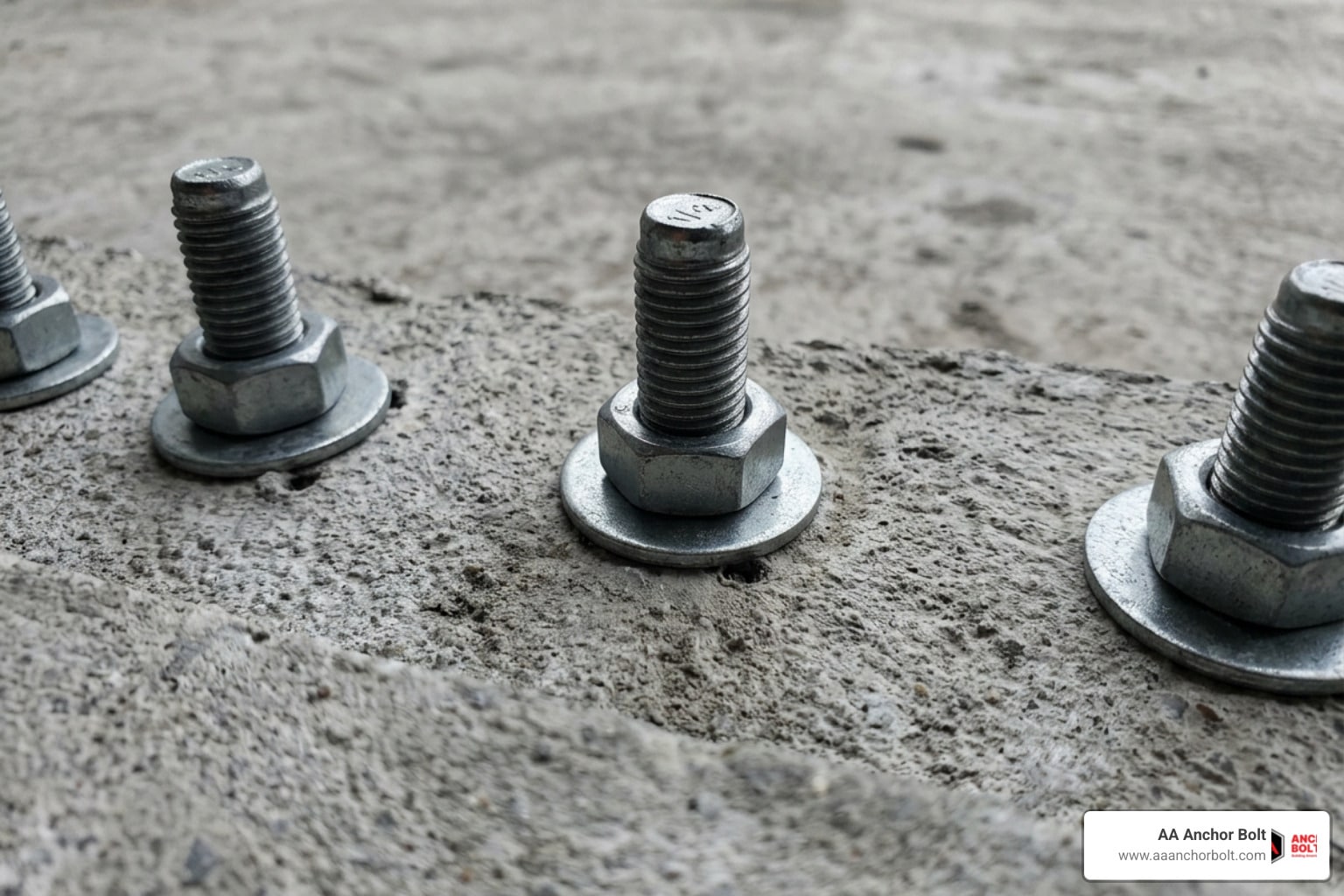
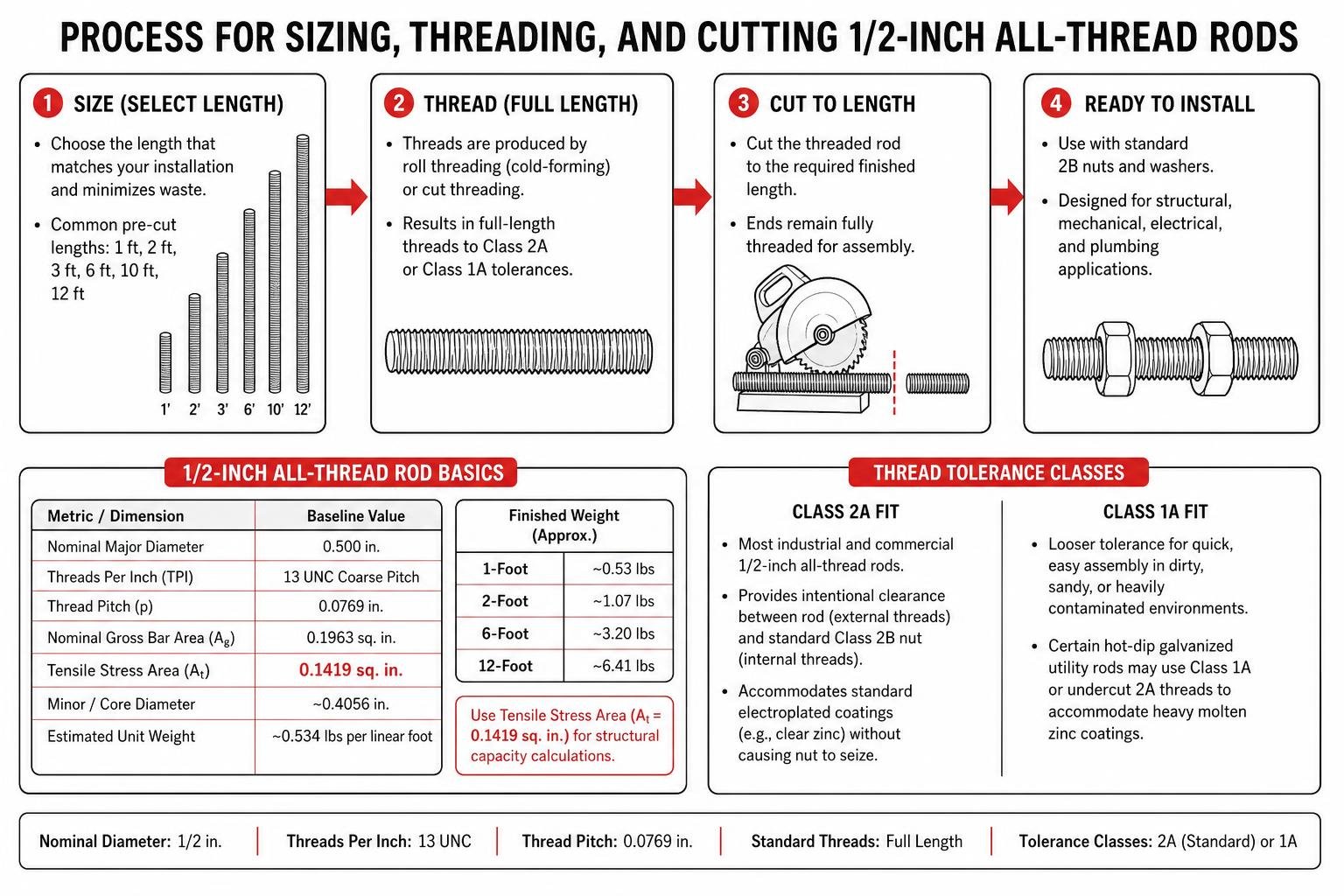
For 1/2-inch rod, the standard thread geometry follows the Unified National Coarse (UNC) specification, designated formally as 1/2-13 UNC. This means the nominal major outside diameter of the steel measures 0.500 inches, and there are exactly 13 threads per axial inch of length.
Engineering specifications for inch-series threaded rods are governed dimensionally by ASME B18.31.3, which details overall dimensional profiles, manufacturing tolerances, straightness limits, and chamfered end requirements. The actual thread form geometry—including crests, roots, pitch diameters, and tolerances—is governed strictly by ASME B1.1.
Understanding thread fit is critical when pairing hardware:
- Class 2A Fit: The vast majority of industrial and commercial 1/2-inch all-thread rods are manufactured to Class 2A external thread tolerances. Class 2A provides an intentional clearance allowance between the external threads of the rod and the internal threads of a standard Class 2B nut. This clearance accommodates standard electroplated coatings (such as clear zinc) without causing the nut to seize during installation.
- Class 1A Fit: Provides a looser, more generous tolerance designed for quick, easy field assembly even in dirty, sandy, or heavily contaminated environments. Certain hot-dip galvanized utility rods, such as a dedicated ATR 1/2″ x 24″ Hot-Dip Galvanized All-Thread Rod ATR1/2X24HDG, may utilize Class 1A or undercut 2A threads to accommodate heavy molten zinc coatings.
To help you calculate shipping weight, material handling logistics, and structural capacity on the job site, the reference table below outlines the dimensional and engineering baseline values for standard 1/2-13 UNC threaded rods:
| Metric / Dimension | Baseline Value | Standard / Rule of Thumb |
|---|---|---|
| Nominal Major Diameter | 0.500 in. (12.7 mm) | ASME B18.31.3 |
| Threads Per Inch (TPI) | 13 UNC Coarse Pitch | ASME B1.1 |
| Thread Pitch ($p$) | 0.0769 in. (1.954 mm) | $1 / \text{TPI}$ |
| Nominal Gross Bar Area ($A_g$) | 0.1963 sq. in. | $\frac{\pi \times D^2}{4}$ |
| Tensile Stress Area ($A_t$) | 0.1419 sq. in. | ASME B1.1 Unified Thread Formula |
| Minor / Core Diameter | ~0.4056 in. | Root diameter of coarse thread |
| Estimated Unit Weight | ~0.534 lbs per linear foot | Standard carbon & stainless steel |
| 1-Foot Finished Weight | ~0.53 lbs | Retail & utility cuts |
| 2-Foot Finished Weight | ~1.07 lbs | Standard packaging |
| 6-Foot Finished Weight | ~3.20 lbs | Mechanical support stock |
| 12-Foot Finished Weight | ~6.41 lbs | Standard mill / master bar length |
The tensile stress area ($A_t = 0.1419\text{ sq. in.}$) is the single most important number in this table for structural calculations. Because threads cut or roll into the base diameter of the steel bar, you cannot use the full 0.500-inch cross section to calculate load-carrying capacity. Structural engineers always multiply the material’s minimum tensile yield or ultimate tensile strength by this effective stress area to establish working and ultimate tension load ratings.
Standard Lengths and Sizing Options for 1 2 Allthread
Depending on your installation parameters, 1/2-inch all-thread is supplied in multiple standard pre-cut lengths and continuous master mill bars:
- 1-Foot Sections: Short utility segments, like a retail All Thread Rod, 1/2 in-13 x 1ft – Forney Industries, are ideal for small equipment mountings, machinery shimming, generator hold-downs, and quick DIY repair assemblies.
- 2-Foot Cut Sections: Widely utilized in residential timber framing, foundation hold-down plates, and shearwall tie-down anchors. An off-the-shelf All Thread Rod, 1/2 in-13 x 2ft delivers convenient handling for standard sill plate anchoring without needing field cutting.
- 3-Foot and 6-Foot Utility Rods: The backbone of mechanical, electrical, and plumbing (MEP) trades. Six-foot rods are easily transported in service vans and cut down to form ceiling trapeze hangers for conduit, piping, fire sprinkler lines, and rectangular HVAC ducting.
- 10-Foot and 12-Foot Industrial Lengths: Standard commercial stock lengths distributed across manufacturing facilities and steel warehouses. Twelve-foot rods minimize end-waste when fabricating dozens of custom embed lengths or spanning multi-story framing cavities in continuous tension restraint systems.
Thread Pitch and Tolerance Classes for 1 2 Allthread
Thread geometry on fully threaded rod is produced either by roll threading (cold-forming the steel between grooved dies) or cut threading (machining material away with rotary dies). Roll threading is the predominant method in modern manufacturing because it displaces the steel’s grain flow without severing it, imparting higher fatigue life and yielding a smooth, work-hardened surface finish.
For tradespeople and field fabricators producing custom anchor studs on-site, knowing how to master rebar threading in less than an hour highlights how die alignment, proper lubrication, and accurate stock preparation determine the precision of Class 2A thread tolerances.
When threading nuts onto a 1/2-13 rod, thread engagement depth matters. For full structural capacity in carbon steel assemblies, the minimum thread engagement depth inside a standard heavy hex nut must equal at least 1.0 times the nominal bolt diameter (0.500 inches). In structural concrete embeds or when utilizing coupling nuts to join two separate 1/2-inch rods, full engagement across the entire nut length ensures the rod will reach its ultimate tensile break point before the internal threads strip.
Material Grades and Mechanical Properties
Selecting the right material grade ensures your fastener won’t fail under static, dynamic, or seismic tension. An all-thread rod might look identical on the outside whether it’s low-carbon steel or high-tensile alloy, but its metallurgical performance varies drastically under load.
SAE J429 Grade 2 (Low-to-Medium Carbon Steel)
The vast majority of general-purpose, zinc-plated 1/2-inch threaded rods sold at hardware stores and retail distributors are manufactured to SAE J429 Grade 2 or commercial equivalent (such as ASTM A307 Grade A).
- Tensile Strength: Approximately 60 to 74 ksi minimum.
- Yield Strength: Approximately 36 to 57 ksi.
- Application Suitability: General carpentry, suspended ceiling hangers, light pipe trapezes, bracket clamping, and non-critical utility connections. Grade 2 material should never be substituted when project blueprints specify engineered structural anchor bolts or high-strength tie-down hardware.
ASTM A193 Grade B8 & ASTM A320 Grade B8 (304 Stainless Steel)
When an installation demands robust corrosion resistance combined with predictable mechanical performance in extreme environments, engineers specify Grade B8 stainless steel.
- Governing Standards: ASTM A193 (standard specification for alloy-steel and stainless steel bolting materials for high-temperature or high-pressure service) and ASTM A320 (governing bolting materials for low-temperature and cryogenic service). Both standards share identical chemical and mechanical requirements for Grade B8 Class 1 threaded rods.
- Tensile Strength: 75 ksi minimum (515 MPa).
- Yield Strength (0.2% Offset): 30 ksi minimum (205 MPa).
- Elongation in 4D: 30% minimum, providing exceptional ductility and plastic deformation before failure.
- Reduction of Area: 50% minimum.
- Hardness Thresholds: Maximum hardness of 223 HBW (96 HRB). For small-diameter threaded rods measuring 3/4-inch and smaller (including our 1/2-inch rod), ASTM standards permit a maximum hardness up to 241 HBW (100 HRB) due to cold-work hardening during the thread-rolling process.
For structural engineers comparing high-stress foundation hold-downs, demystifying ASTM F1554 grades 36, 55, and 105 explains how cast-in-place anchor bolt specifications differ from continuous all-thread rods in yield requirements, elongation minimums, and bend test parameters.
| Property / Parameter | Grade 2 Carbon Steel (Typical) | 304 Stainless Steel (ASTM A193/A320 B8) | ASTM A193 Grade B7 (Alloy Steel Ref) |
|---|---|---|---|
| Nominal Tensile Strength | 60,000 – 74,000 psi | 75,000 psi min (75 ksi) | 125,000 psi min (125 ksi) |
| Nominal Yield Strength | ~36,000 – 57,000 psi | 30,000 psi min (30 ksi) | 105,000 psi min (105 ksi) |
| Minimum Elongation | 18% | 30% | 16% |
| Tensile Area ($A_t$) | 0.1419 sq. in. | 0.1419 sq. in. | 0.1419 sq. in. |
| Ultimate Tensile Load | ~8,514 – 10,500 lbs | ~10,642 lbs min | ~17,737 lbs min |
| Yield Tension Load | ~5,108 – 8,088 lbs | ~4,257 lbs min | ~14,899 lbs min |
| Corrosion Resistance | Low (Requires Plating) | Very High (Passive Chromium Oxide) | Low (Requires Coating/Oiling) |
Carbon Steel vs. 304 Stainless Steel Performance
The performance divergence between carbon steel and 304 austenitic stainless steel comes down to chemical composition.
Under ASTM A193/A320 Grade B8, 304 stainless steel contains:
- Chromium (Cr): 18.0% to 20.0%
- Nickel (Ni): 8.0% to 11.0%
- Carbon (C): 0.08% maximum
- Manganese (Mn): 2.00% maximum
- Phosphorus (P): 0.045% maximum
- Sulfur (S): 0.030% maximum
- Silicon (Si): 1.00% maximum
Chromium reacts with atmospheric oxygen to form an invisible, self-healing chromium oxide film across the entire surface of the threads. If the rod is nicked, scratched, or cut in the field, this passive film re-forms instantly, preventing rust propagation. Standard Grade 2 carbon steel lacks chromium and nickel; once its microscopic surface plating is breached, oxidation immediately begins degrading the load-bearing root diameter of the threads.
When reviewing heavy industrial anchors, the complete guide to F1554 anchor bolt specs provides further technical insight into how carbon chemistry and yield-to-tensile ratios protect structural frames from catastrophic brittle failure.
Protective Coatings and Environmental Durability
Choosing the right protective finish is just as important as selecting the right steel grade. Fastener failure in outdoor or chemically aggressive settings is almost always caused by improper coating selection rather than pure mechanical overload.
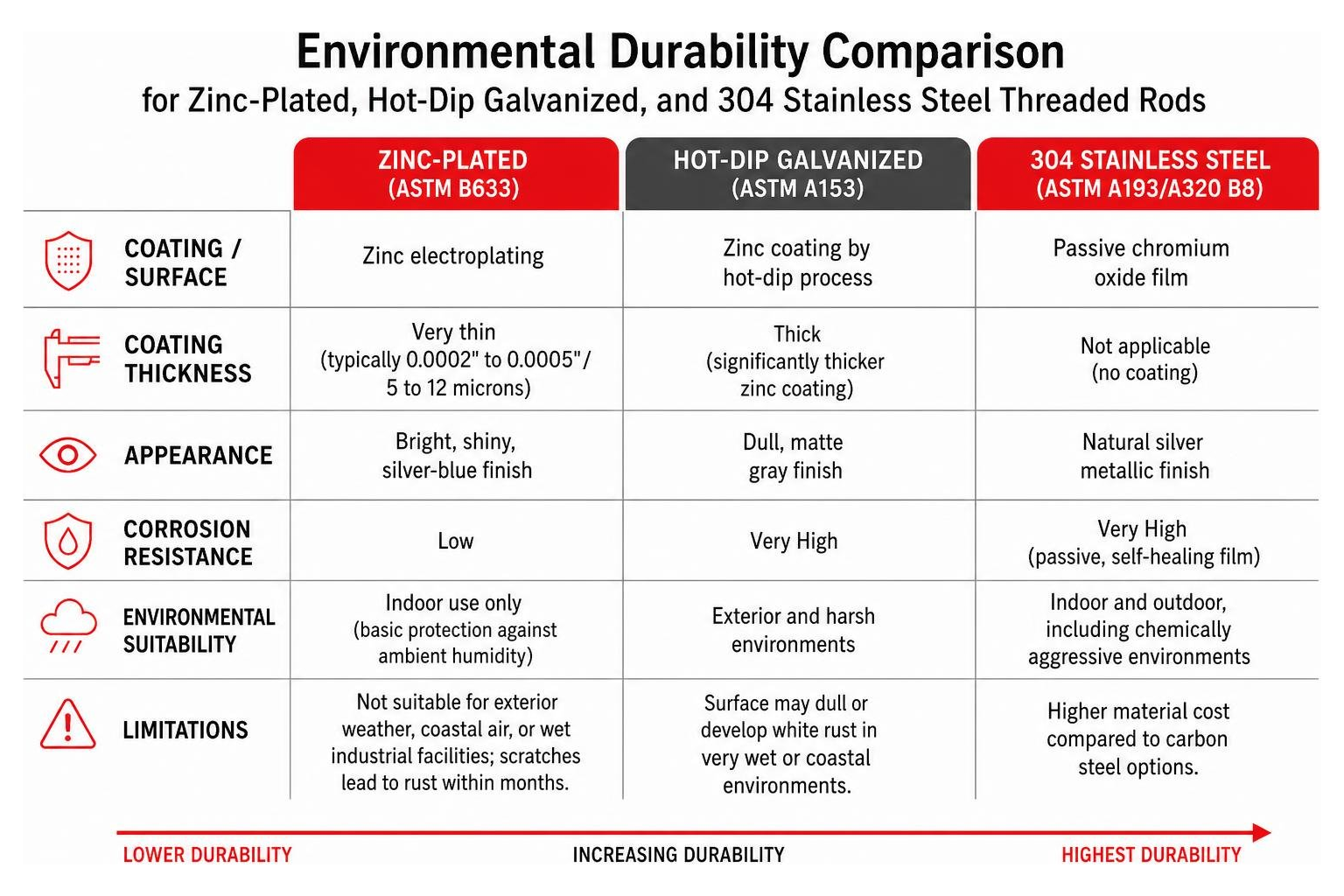
1. Zinc Electroplating (ASTM B633)
- Coating Thickness: Very thin (typically 0.0002″ to 0.0005″ / 5 to 12 microns).
- Appearance: Bright, shiny, silver-blue decorative finish.
- Performance: Provides basic indoor protection against ambient humidity.
- Limitations: Not suitable for exterior weather exposure, coastal air, or wet industrial facilities. In outdoor environments, microscopic surface scratches will allow rust to bloom within months.
2. Hot-Dip Galvanizing (ASTM A153 Class C / ASTM F2329)
- Coating Thickness: Thick, rugged zinc-iron alloy layer (typically 0.0017″ to 0.0034″ / 43 to 86 microns).
- Appearance: Dull matte gray, slightly rough textured finish.
- Performance: Excellent long-term sacrificial barrier protection for outdoor utility poles, structural framing ties, highway signage, and agricultural barns. Crucially, hot-dip galvanizing is mandatory when 1/2-inch all-thread contacts pressure-treated exterior lumber containing corrosive copper-based preservatives (such as ACQ or CA-B).
- Critical Mating Rule: Hot-dip galvanizing deposits a heavy, uneven zinc layer within the roots and crests of machine threads. As a result, standard Class 2B nuts will bind and lock up after just one or two turns. You must always pair hot-dip galvanized all-thread rod with hot-dip galvanized nuts that have been tapped oversize (overtapped by +0.015″ to +0.021″) to compensate for the zinc thickness.
3. 304 & 316 Stainless Steel
- Coating Thickness: Solid base metal throughout (no coating to chip, scratch, or peel).
- Appearance: Semi-reflective, clean metallic finish.
- Performance: Highest level of durability. Ideal for wastewater treatment plants, food processing washdown areas, coastal structures, marine bulkheads, and chemical containment basins. For saltwater splash zones or direct deicing salt exposure, step up from 304 to 316 stainless steel (which adds 2.0% to 3.0% molybdenum to eliminate pitting from chlorides).
Structural Applications, Tie-Downs, and Concrete Anchoring
The continuous threading of a 1/2-inch rod allows you to thread nuts and positioning hardware anywhere along its shaft. This makes 1/2-inch all-thread a problem solver across civil infrastructure, commercial construction, and framing trades.
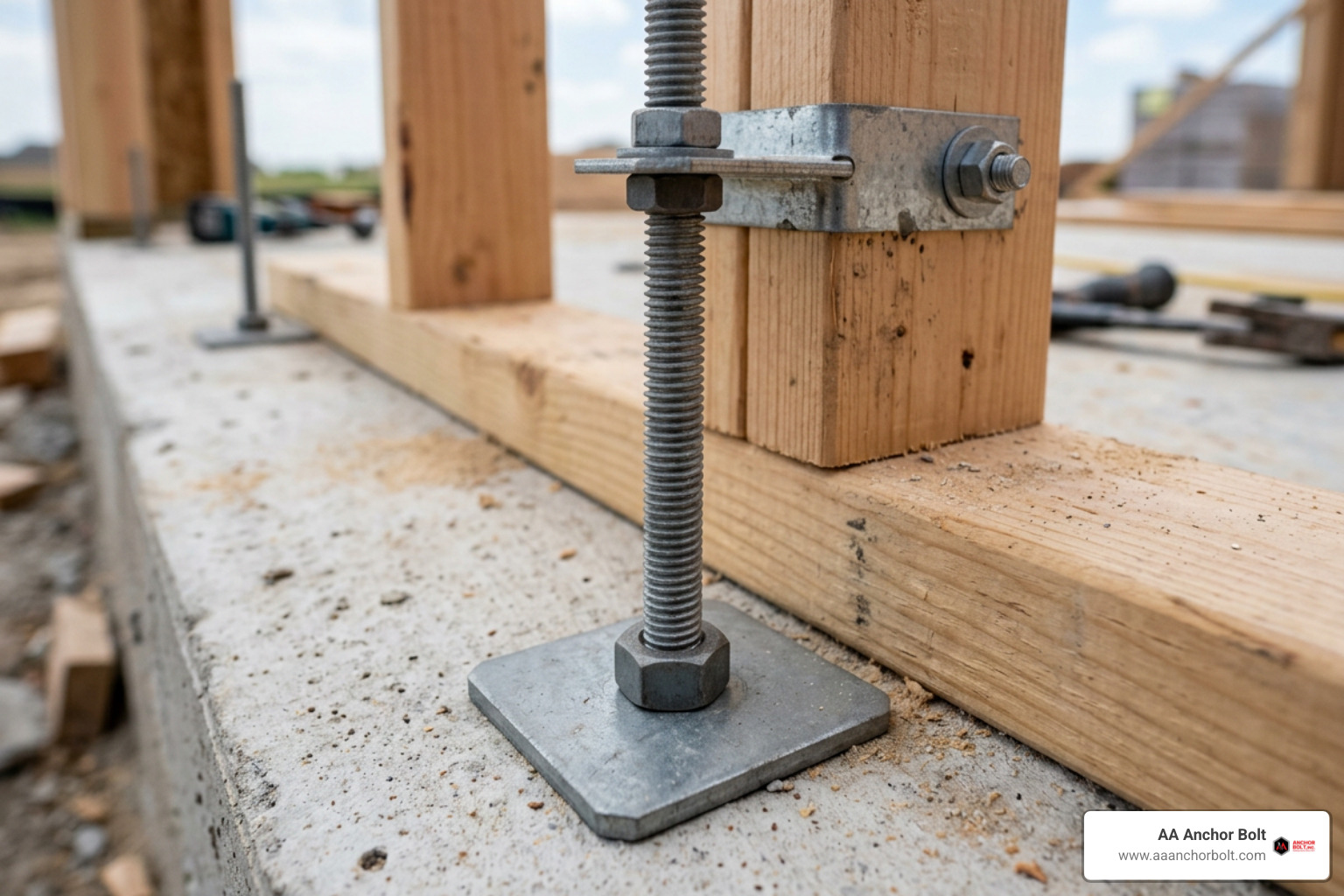
1. Continuous Shearwall Tie-Down & Wind Uplift Restraint
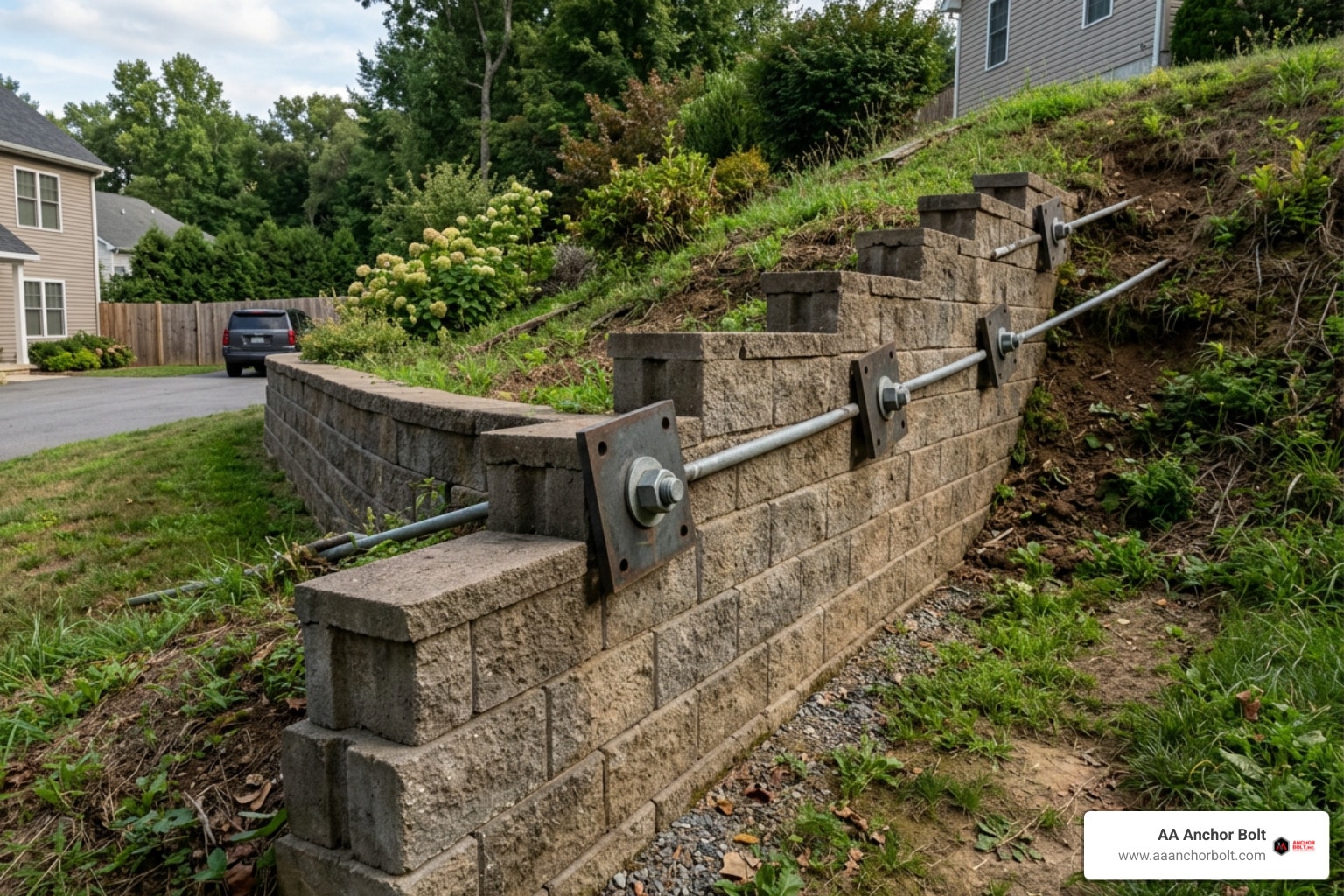
In modern wood-frame and light-gauge steel construction, continuous all-thread rods act as structural tension transfer elements within Anchor Tiedown Systems (ATS) and Wind Uplift Restraint Systems (URS). Spanning continuously from the roof truss down through intermediate multi-story floor plates into the foundation slab, these rod assemblies resist massive lateral shear overturning and vertical roof uplift loads during high-wind and seismic events.
2. Concrete Embeds and Post-Installed Chemical Anchoring
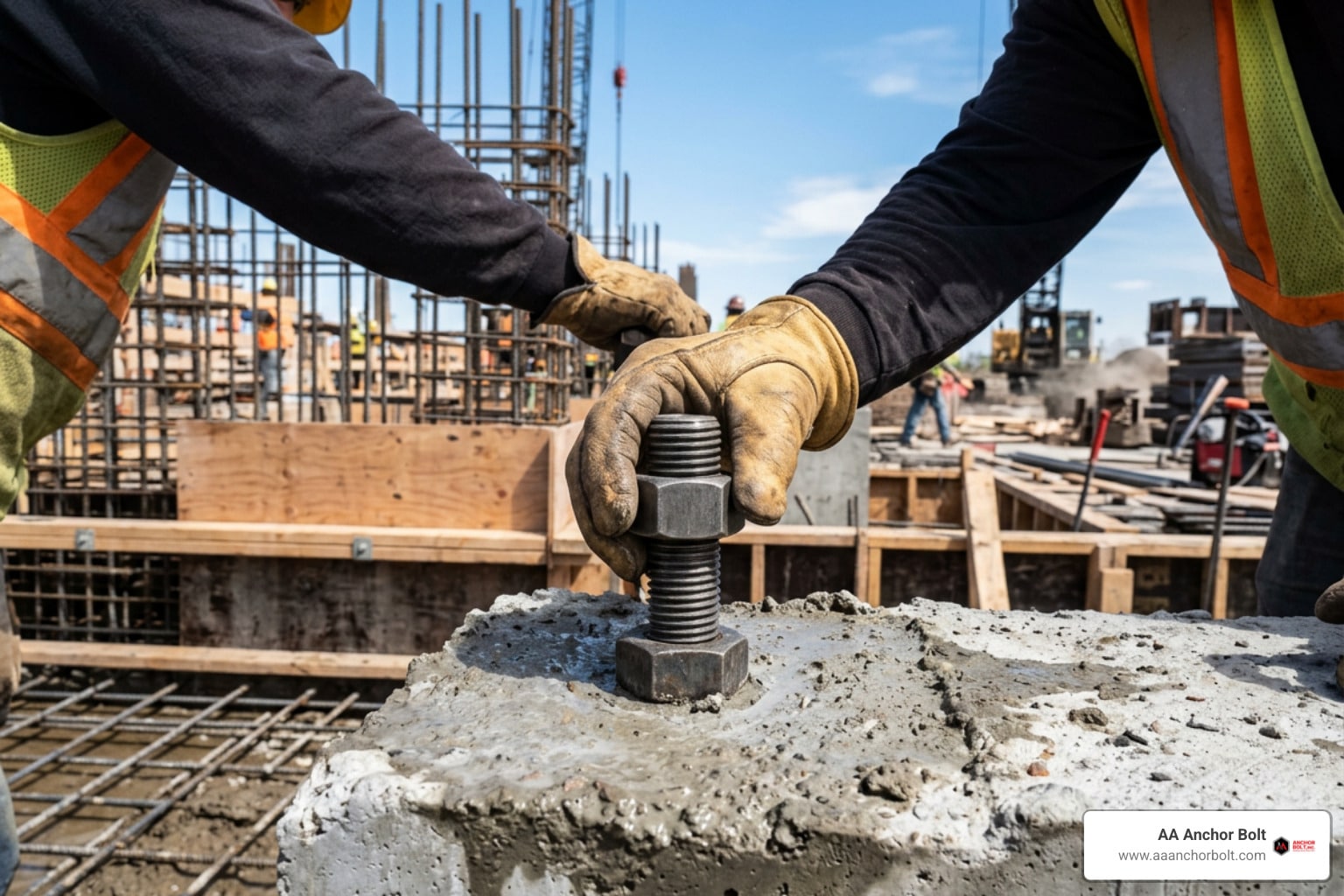
Fully threaded rods are widely used as cast-in-place anchor studs (anchored at the base using a heavy hex nut and square plate washer) or as post-installed adhesive anchors. In retrofit jobs, holes are drilled into cured concrete, blown clean, filled with structural epoxy or vinylester adhesive, and spun with a 1/2-inch cut threaded rod segment. The coarse 13-TPI threads create mechanical interlock with the cured epoxy matrix.
For large infrastructure projects requiring high tension loads embedded in concrete, the civil engineer’s guide to threaded rebar and infrastructure details how continuous steel bars integrate with structural foundations.
3. Mechanical, Electrical, and HVAC Ceiling Trapezes
HVAC contractors and commercial plumbers depend on 1/2-13 all-thread hung from concrete deck inserts or strut channel clamps. Pairs of rods drop vertically to support horizontal unistrut cross-members, creating suspended “trapeze” racks that carry heavy chilled-water piping, industrial cable trays, and ventilation ductwork.
4. Heavy Timber Framing and Through-Bolting
When joining multi-ply laminated timber beams, heavy wood trusses, or ledger boards to solid structures, standard hex bolts are rarely long enough. Tradespeople easily cut custom 18-inch or 24-inch lengths of hot-dip galvanized 1/2-inch all-thread to pass completely through timber assemblies, torquing both ends down over heavy malleable iron washers.
Cost Ranges, Selection Guidelines, and Rod Substitutes
Pricing Expectations & Material Impacts
The cost of 1/2-inch all-thread varies according to raw steel market fluctuations, length, coating specifications, and domestic manufacturing traceability:
- Standard Zinc-Plated Grade 2: Retail pricing generally runs around $8.49 for a 2-foot rod and approximately $24.99 for a 6-foot length. Master 12-foot warehouse stock offers the best economy of scale for commercial job sites.
- Hot-Dip Galvanized Cut Rods: A pre-cut 1/2″ x 24″ hot-dip galvanized structural rod typically retails at $8.56, reflecting the thermal processing and galvanizing bath costs.
- 304 Stainless Steel Industrial Rods: A 12-foot length of 1/2-13 304 stainless steel carries a noticeable material surcharge over carbon steel due to its high chromium and nickel content, though it eliminates future maintenance and recoating expenses.
Structural Alternatives and Heavy-Duty Substitutes
When a project requires tensile capacities, ductility profiles, or weldability beyond what standard 1/2-inch all-thread can provide, engineers turn to robust alternatives:
- Continuous Threaded Rebar: When anchoring deep into reinforced concrete, utilizing threaded rebar for commercial projects: no welding, no worries provides exceptional concrete bonding combined with coarse rolled-on end threads.
- High-Strength Infrastructure Threaded Rods: For massive bridges and crane foundations, industrial rebar threading solutions for maximum tensile strength illustrate how heavy-diameter engineered alloy rods outmatch standard commercial hardware.
- Grade 316 Stainless Steel: For severe marine environments, 316 stainless all-thread serves as a direct, corrosion-proof substitute for 304 stainless steel.
Best Practices for Cutting, Deburring, and Installation
To prevent stripped hardware or stalled crews on the job site:
- Thread Two Nuts First: Before cutting all-thread with a portable band saw or abrasive wheel, thread two hex nuts onto the rod past your intended cut line.
- Make a Square Cut: Cut straight through the rod at a clean 90-degree angle to avoid creating elliptical threads.
- Chamfer and Deburr: Grind a light 45-degree bevel around the cut tip using an angle grinder, flap disc, or dedicated deburring tool.
- Back Off the Nuts: Unthread the nuts off the freshly cut end. As the internal threads of the nut back off over the lead thread, they clear out metal filings and straighten any displaced burrs.
- Keep Hardware Matched: Never combine plain steel or zinc-plated nuts with hot-dip galvanized rod. Match plating to plating, stainless grade to stainless grade, and always apply anti-seize lubricant when assembling stainless steel fasteners to eliminate galling.
Warranty and Purchasing Policies
Standard retail all-thread products typically include basic 30-day return windows covering manufacturing defects in workmanship and material. When buying industrial-scale quantities for commercial builds, partner with manufacturers that maintain full material test reports (MTRs) and verifiable lot traceability.
Frequently Asked Questions About 1/2-Inch All-Thread Rods
What is the standard thread pitch for a 1/2-inch all-thread rod?
The universal North American standard for 1/2-inch threaded rod is 1/2-13 UNC (Unified National Coarse), which features 13 threads per inch along its entire length. Fine thread pitch (1/2-20 UNF) exists for specialized automotive and machinery applications, but 1/2-13 UNC is the standard across commercial construction, MEP hanging, and structural anchor installations.
What is the load capacity and tensile strength of 1/2-inch 304 stainless steel rod?
A 1/2-13 304 stainless steel threaded rod (ASTM A193/A320 Grade B8) has a minimum tensile strength of 75 ksi (75,000 psi) and a minimum yield strength of 30 ksi (30,000 psi). Based on the standard 1/2-13 tensile stress area of $0.1419\text{ sq. in.}$, this translates to a minimum ultimate breaking strength of approximately 10,642 pounds in pure static axial tension. For engineering design purposes, safety factors (typically 3:1 to 5:1 for structural and suspended MEP loads) must always be applied to calculate safe working load limits (SWL).
Why must nut coatings match the finish of hot-dip galvanized all-thread rod?
Hot-dip galvanizing deposits a heavy, protective zinc layer (typically 43 to 86 microns) into the thread valleys. If you attempt to thread a standard zinc-plated or plain bare steel Class 2B nut onto a hot-dip galvanized rod, the nut will bind and lock up due to zero thread clearance. Hot-dip galvanized all-thread rods must always be paired with hot-dip galvanized hex nuts that have been tapped oversize (overtapped) by the manufacturer specifically to accommodate this zinc thickness.
Conclusion
Whether you are anchoring a multi-story shearwall against hurricane winds, suspending critical mechanical piping from concrete ceilings, or framing outdoor timber decks, selecting the right 1/2-inch all-thread rod comes down to three fundamental rules: verify your tensile and yield load requirements, choose the protective finish matching your exposure environment, and maintain strict hardware compatibility between rods, nuts, and washers.
At AA Anchor Bolt, we understand that on-site delays cost real money. Operating from our state-of-the-art facility in Northville, Michigan, we maintain nearly a million pounds of prime domestic steel in stock. With complete in-house domestic production control, our team specializes in delivering custom threaded rods, bent anchor bolts, tie-rod assemblies, and structural fasteners with rapid turnaround times tailored to your exact blueprint specifications.
Ready to secure your next project with reliable American manufacturing? Explore our full lineup of custom threaded rods and anchoring products or connect with our engineering team today for technical support and custom manufacturing quotes.