Plating in the Barrel: Understanding Mechanical Galvanized Bolts
Mechanical Galvanized Bolts: A Quick Definition
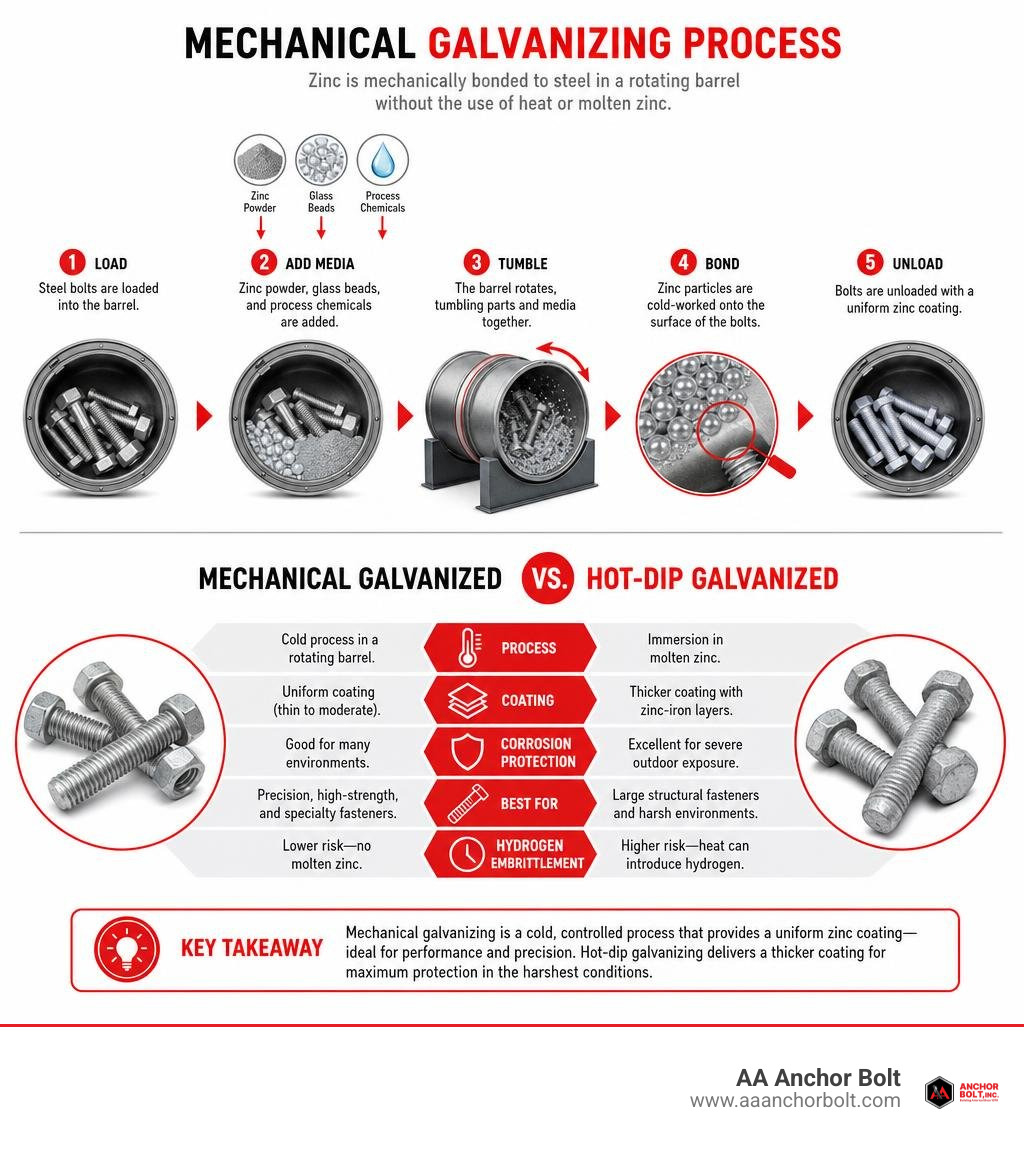
Mechanical galvanized bolts are steel fasteners coated with zinc in a rotating barrel. Glass beads, zinc powder, and process chemicals tumble together to mechanically bond zinc onto the bolt surface without dipping the bolt in molten zinc.
| Quick question | Short answer |
|---|---|
| How are they made? | Zinc powder is cold-worked onto bolts in a tumbling barrel. |
| Why choose them? | They provide a uniform coating and help avoid hydrogen embrittlement in high-strength fasteners. |
| Are they the same as hot-dip galvanized bolts? | No. Hot-dip galvanizing forms a thicker, metallurgically bonded zinc-iron coating in molten zinc. |
| What standard applies? | ASTM B695 covers mechanically deposited zinc coatings, with specified thicknesses from about 0.2 to 4.3 mils. |
The word galvanized alone does not tell a contractor which process was used. That matters when a project needs reliable thread fit, high-strength hardware, or long service life outdoors. Mechanical plating can be a practical finish for hardened bolts and specialty fasteners, while hot-dip galvanizing is often the stronger choice for large structural fasteners exposed to demanding weather and corrosion.
I am Pauline Horton, and I will walk through how the barrel process works and what it means for your fastener specification.
What Are Mechanical Galvanized Bolts and How Are They Made?
To understand how mechanical galvanized bolts get their protective finish, we have to look inside the plating barrel. Unlike conventional hot-dip galvanizing—where steel components are submerged in baths of molten zinc reaching temperatures around 840°F (450°C)—mechanical plating is a cold welding process conducted at room temperature.
The fundamental science relies on kinetic energy. By tumbling prepared steel fasteners alongside precise proportions of glass beads, water, fine zinc powder, and chemical promoter agents, the zinc particles are physical flattened and cold-welded onto the surface of the steel. This process is frequently chosen for precision fasteners, specialized automotive components, and hardened structural hardware.

The Barrel Plating Process for Mechanical Galvanized Bolts
The manufacturing sequence inside a mechanical plating plant follows a carefully managed chemical and physical process:
- Surface Preparation: Fasteners undergo thorough cleaning and degreasing to eliminate oils and scale. Unlike electroplating or hot-dip methods that rely on aggressive acid pickling, mechanical plating uses mild chemical prep to avoid driving atomic hydrogen into the steel.
- Copper Flash Application: A micro-thin layer of copper is chemically deposited onto the steel surface. This copper strike acts as a bonding primer, improving the adhesion of subsequent metal layers.
- Glass Bead and Chemical Addition: The tumbling drum is loaded with a tailored blend of spherical glass beads in various sizes. Chemical promoters and accelerators are introduced to clean the zinc particles and lower surface tension.
- Zinc Powder Addition and Mechanical Peening: Fine zinc powder is added incrementally. As the drum rotates, the glass beads strike the zinc powder particles against the copper-flashed steel, flattening and welding the zinc into a continuous, dense metal barrier.
- Rinsing and Post-Treatment: Once the targeted coating thickness is built up, the fasteners are separated from the glass media, thoroughly rinsed, and often treated with a chromate or dichromate conversion seal to boost initial corrosion resistance.
To compare how this room-temperature peening methodology contrasts with traditional molten dips, explore the detailed breakdown on Mechanical Plating vs. Hot-Dip Galvanizing.
Key Standards: ASTM B695 and Coating Specifications
When specifying mechanical galvanized bolts for construction, agriculture, or industrial equipment, civil engineers rely on clear manufacturing standards. The primary standard controlling this process is ASTM B695 (Standard Specification for Coatings of Zinc Mechanically Deposited on Iron and Steel).
Under ASTM B695, mechanical zinc coatings are categorized into distinct classes based on nominal coating thickness:
- Class 5 to Class 25 (approx. 0.2 to 1.0 mil / 5 to 25 µm): Used primarily for interior hardware, light-duty fasteners, and threaded components requiring tight tolerances.
- Class 50 to Class 80 (approx. 2.0 to 3.2 mils / 50 to 80 µm): Common for outdoor structural connections where moderate atmospheric protection is needed.
- Class 110 (approx. 4.3 mils / 110 µm): Represents the heavy-end spectrum of mechanical deposition, engineered for severe outdoor weathering.
International delivery guidelines, such as those discussed in standard fastener conditions like DIN 267 – PDFCOFFEE.COM , outline similar technical requirements for mechanical finishes to ensure batch consistency and dimensional control across production lots.
Mechanical Galvanizing vs. Hot-Dip Galvanizing: Primary Differences
Engineers often ask us whether mechanically plated bolts can directly replace hot-dip galvanized bolts on job sites. While both options utilize zinc to shield carbon steel against oxidation, their chemical composition, structural density, and protective mechanics are fundamentally distinct.
| Property / Feature | Mechanical Galvanizing (ASTM B695) | Hot-Dip Galvanizing (ASTM A153 / F2329) |
|---|---|---|
| Process Temperature | Room temperature / Cold mechanical peening | High temperature (~840°F / 450°C) |
| Bond Type | Mechanical bond (cold-welded particles) | Metallurgical bond (intermetallic zinc-iron layers) |
| Coating Density | ~0.45 oz/ft²/mil | ~0.60 oz/ft²/mil (>30% denser zinc volume) |
| Hydrogen Embrittlement | Zero risk (no acid pickling or electro-current) | Requires careful acid control/baking for high strength |
| Thread Uniformity | Excellent (smooth crests and roots) | Requires nut overtapping or thread chasing |
| Edge & Corner Thickness | Thinner at sharp edges/threads due to tumbling | Equal or thicker at edges due to molten zinc flow |
Coating Density, Bonding, and Edge Coverage Dynamics
The primary performance difference between mechanical plating and hot-dip galvanizing lies in the zinc coating’s microscopic structure and density.
Mechanically deposited coatings consist of tiny, compressed zinc granules held together by physical cold-welding and mechanical interlocking. Consequently, mechanical zinc yields a coating density of roughly 0.45 oz/ft²/mil. By contrast, hot-dip galvanizing forms zinc-iron alloy layers through a molten diffusion process, producing a coating density of about 0.60 oz/ft²/mil.
This means hot-dip galvanizing provides over 30% more sacrificial zinc per unit volume than mechanical plating. In real-world outdoor environments, zinc corrodes sacrificially at a rate proportional to its mass; higher volumetric density translates directly to a longer maintenance-free lifespan.

Furthermore, tumbling dynamics cause glass beads to strike flat surfaces and outer thread flanks directly, while sharp crests, corners, and thread roots receive lighter impact. As a result, mechanically plated bolts can develop slightly thinner zinc coverage on sharp edges. Hot-dip galvanizing naturally builds thick, durable alloy layers on corners and sharp profiles. For an in-depth look at how hot-dip coatings protect steel against atmospheric rust, read our guide on Why Hot Dipped Galvanized Bolts Are Your Best Defense Against Rust.
Mechanical Galvanized Bolts for High-Strength Fasteners
Where mechanical galvanized bolts truly excel is in high-strength, heat-treated steel applications where hydrogen embrittlement presents a catastrophic failure risk.
When high-tensile carbon steel fasteners (such as ASTM A490 bolts, Property Class 10.9, or Property Class 12.9 bolts) are exposed to hydrogen atoms during acid pickling or electroplating, atomic hydrogen can migrate into the metal grain boundaries. Under high sustained tensile loads, trapped hydrogen causes sudden, brittle cracking beneath the bolt head or across the threaded shank.
Because mechanical galvanizing uses mild non-acidic prep treatments and eliminates electrical current during deposition:
- No atomic hydrogen is generated or driven into the metal matrix.
- Fasteners do not require post-plating stress-relief baking operations (which can take 4 to 24 hours at elevated temperatures).
- Hardened washers, high-strength cap screws, and specialized self-tapping hardware maintain full structural integrity.
This makes mechanical plating an exceptional option for ultra-high-strength components, such as a Grade 12.9 Carbon Steel ZP GAL Galvanized Yellow Zinc Plated Double Hanger Head Metal Bolt Self Tapping – cnc-partsmachining , where traditional plating methods pose severe hydrogen embrittlement concerns.
Benefits and Limitations of Mechanical Galvanized Bolts
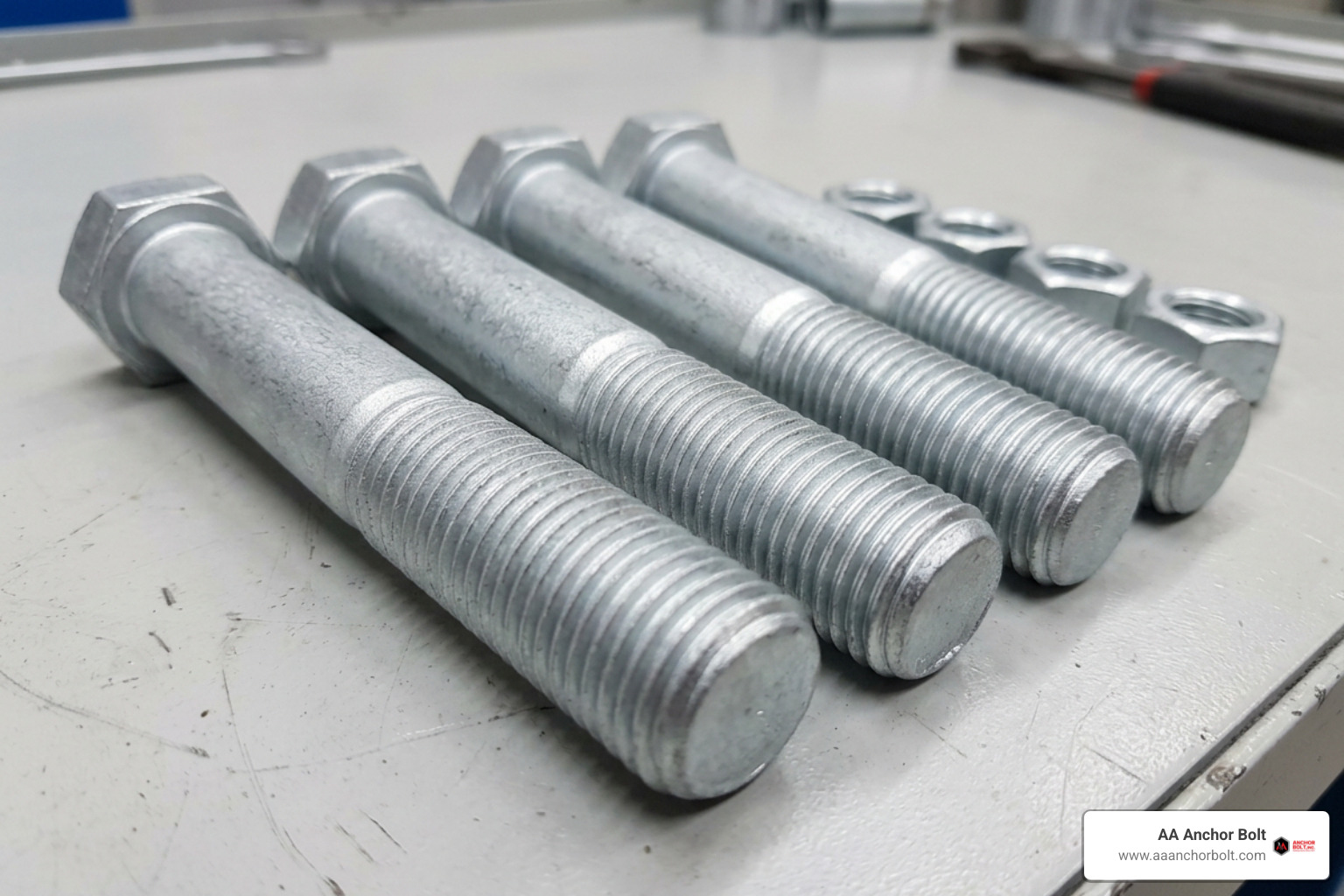
Selecting the ideal coating for heavy construction or OEM machinery involves balancing mechanical performance, corrosion resistance, thread fit, and overall project budget.
Advantages: Precision Threads and Zero Embrittlement
The mechanical barrel process offers several distinct engineering advantages:
- Superior Thread Pitch Fit: Because zinc is cold-peened evenly across the bolt surface without pooling in thread roots or forming thick drips, mechanically plated bolts maintain clean pitch diameters. Mating nuts often spin smoothly on without needing significant overtapping.
- Zero Risk of Hydrogen Embrittlement: High-strength fasteners (tensile strength > 1400 MPa / 150 ksi) can be safely zinc-coated without delicate post-baking heat cycles.
- No Heat Distortion: Operating at ambient temperatures prevents thermal warping or temper loss in precision-machined or heat-treated hardware.
- Custom Post-Treatments: Mechanically galvanized parts easily accept secondary conversion coatings, such as yellow dichromate or clear passivation seals, to improve aesthetic appearance and salt spray performance.
To learn more about how custom coatings can be integrated into specialized manufacturing runs, review our full line of fastener Services.
Disadvantages: Edge Adhesion and Lower Zinc Volume
Despite these advantages, mechanical plating presents specific trade-offs:
- Weaker Physical Bonding: The mechanical bond formed by compressed zinc particles relies on cold-welding and mechanical mechanical interlock rather than atomic diffusion. High physical impacts or severe friction during installation can scrub mechanical zinc off steel faster than metallurgical hot-dip layers.
- Reduced Volumetric Zinc Protection: Because mechanical zinc is roughly 30% less dense than hot-dip zinc, an equivalent coating thickness offers shorter overall sacrificial life in aggressive marine or chemical environments.
- Edge Coverage Variations: The peening action of tumbling glass beads is less effective inside micro-recesses, deep internal sockets, and sharp outer corners, leaving slight variations in local coating thickness.
Real-World Applications: When to Specify Mechanical vs. Hot-Dip Galvanizing
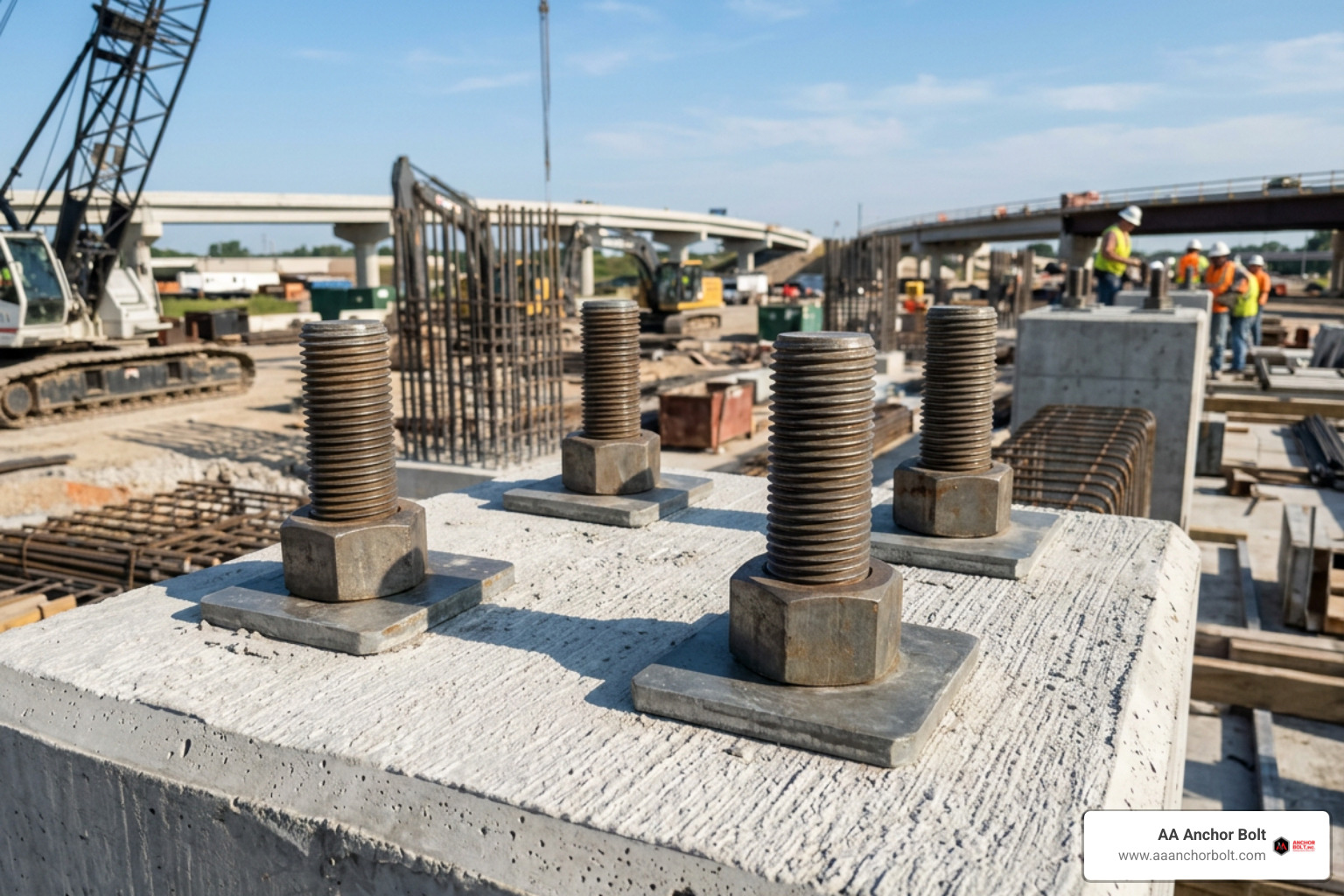
Knowing when to specify mechanical plating versus hot-dip galvanizing ensures both regulatory compliance and long-term joint integrity. Detailed engineering standards, such as the Best Practice Guide for Hot Dip Galvanized Bolts and Bolted Joints , highlight how fastener selection dictates bolted connection design in civil infrastructure.
High-Stress and Hardened Fastener Applications
Mechanical galvanizing is the preferred specification for high-stress, hardened steel hardware where hydrogen embrittlement must be avoided and thread fit precision is critical:
- Case-Hardened Concrete Screw Anchors: High-tensile threads that cut directly into masonry benefit from uniform coating thickness and zero embrittlement risks.
- Hardened Lockwashers and Spring Clips: Thin-section, high-carbon steel components that would crack or lose temper under hydrogen exposure or excessive thermal heat.
- High-Tensile Cap Screws and Structural Clips: Fasteners rated above Property Class 10.9 used in automotive chassis, mining equipment, and agricultural machinery.
For recommendations on heavy-duty masonry fasteners, consult The Concrete Fastener Guide for Heavy Duty Anchoring.
Outdoor Infrastructure and Heavy Corrosion Environment Specifications
For heavy civil construction, highway bridge framing, utility towers, and submerged marine foundations, hot-dip galvanizing remains the industry gold standard.
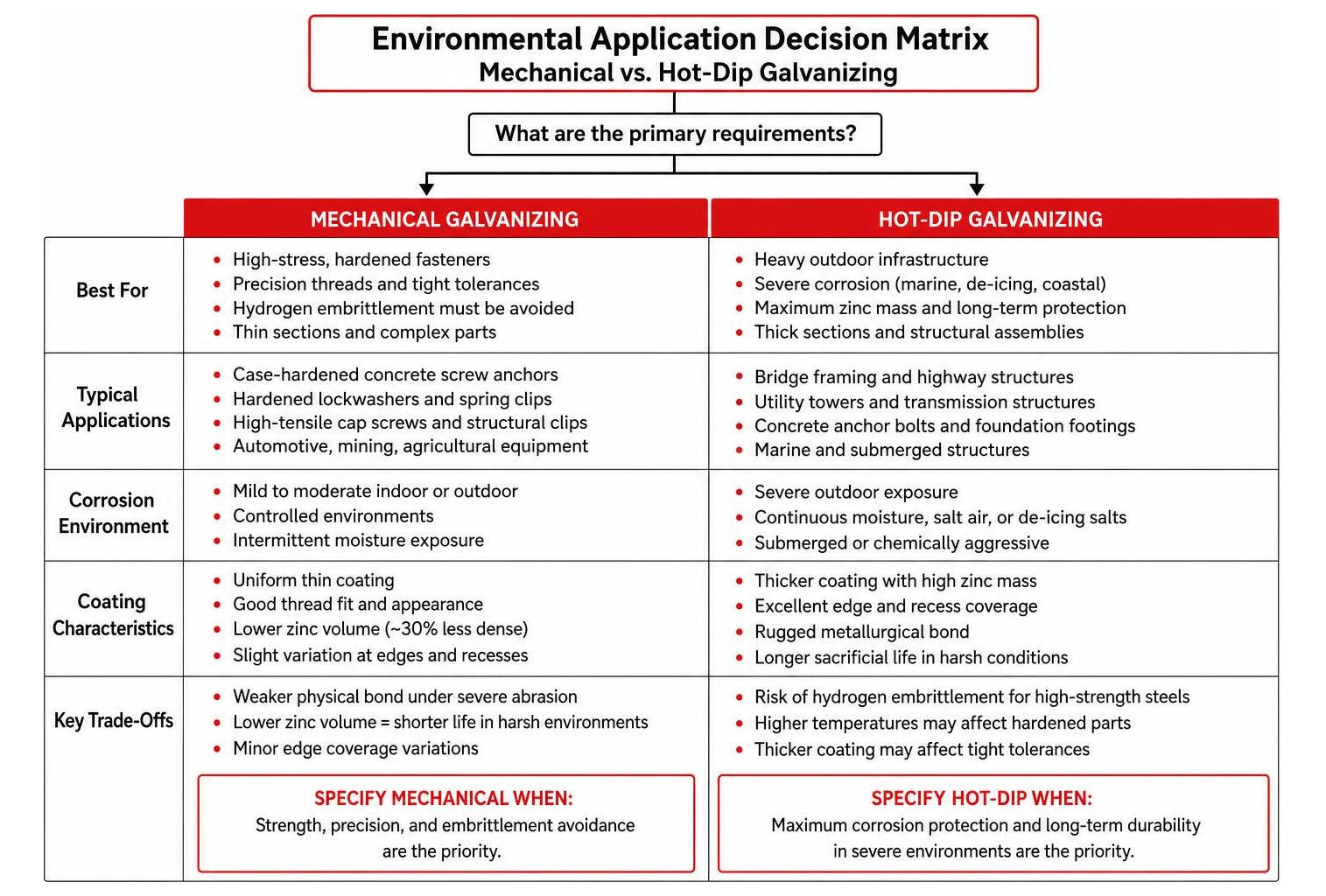
Hot-dip galvanized bolts should be specified when:
- Structural elements will be exposed to severe atmospheric weathering, de-icing salts, or coastal salt air for decades.
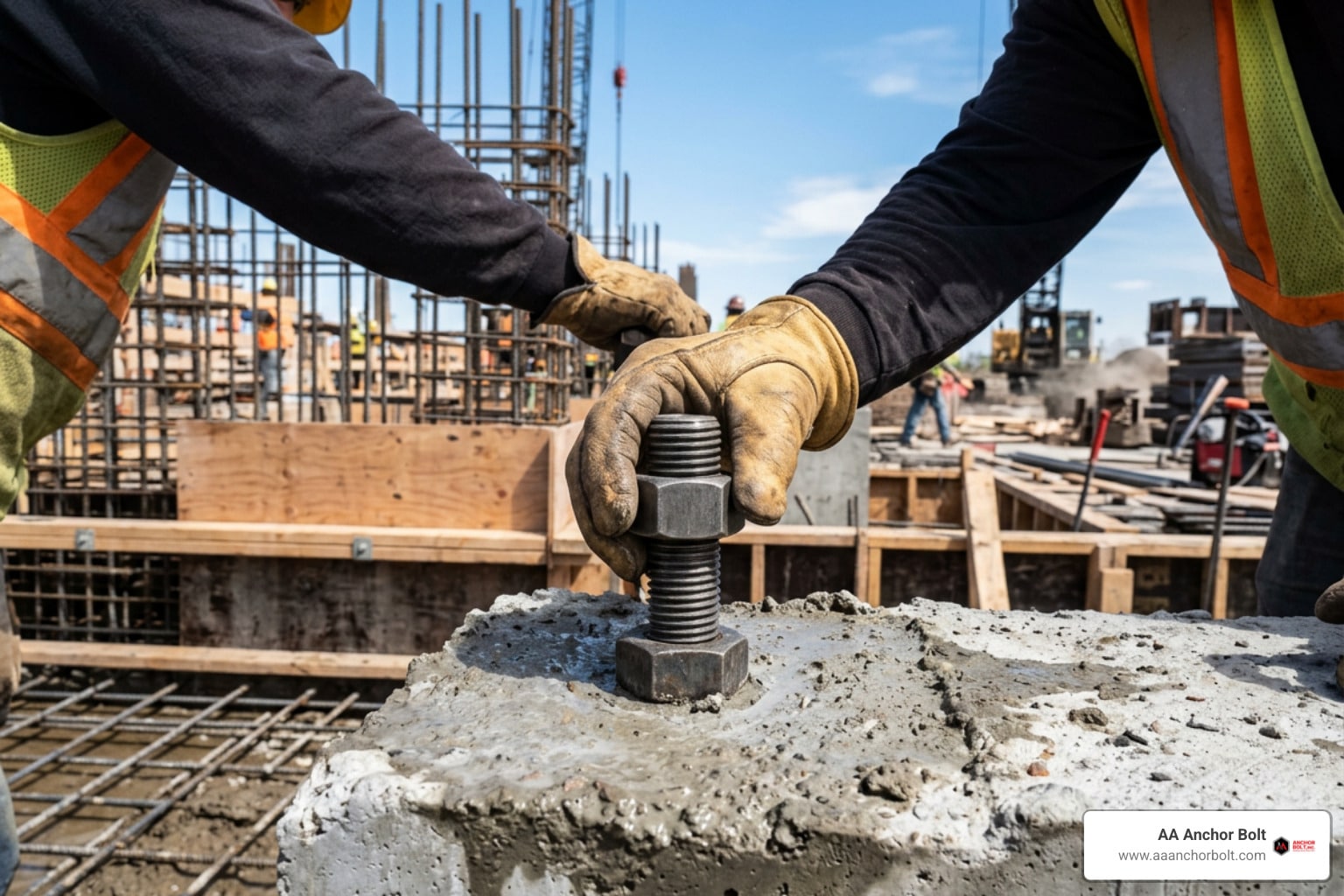
- Anchor bolts embedded in concrete foundation footings require maximum zinc mass to prevent subsurface rust.
- Structural steelwork uses thick plates and heavy structural bolts (such as ASTM F3125 Grade A325 or F1554 anchor rods) where high zinc volume outweighs micro-thread precision.
For comprehensive guidelines on foundation anchorage, read How to Choose and Use Hot Dipped Galvanized Anchor Bolts.
Frequently Asked Questions about Mechanical Galvanized Bolts
Do mechanical galvanized bolts offer the same rust protection as hot-dip galvanizing?
Not on a mil-for-mil volumetric basis. While a multi-layer or “triple” mechanical zinc coating with a chromate seal can match hot-dip galvanizing in standard neutral salt spray tests, real-world atmospheric weathering favors hot-dip coatings. Hot-dip galvanizing contains over 30% more zinc per unit volume (0.60 oz/ft²/mil vs 0.45 oz/ft²/mil) and features hard zinc-iron intermetallic alloy layers that resist mechanical abrasion far better than compressed zinc powder.
Why does mechanical galvanizing prevent hydrogen embrittlement in high-carbon steel?
Mechanical galvanizing prevents hydrogen embrittlement because it eliminates both aggressive acid pickling and electrical immersion currents. In electroplating, electrical currents hydrolyze water into free hydrogen ions that readily penetrate high-carbon steel grain boundaries. Mechanical plating uses mild chemical prep and physical glass bead peening at room temperature, ensuring zero hydrogen is trapped inside the steel matrix.
What coating thickness range does ASTM B695 require for mechanical plating?
ASTM B695 establishes coating thickness classes ranging from Class 5 (0.2 mils / 5 µm) up to Class 110 (4.3 mils / 110 µm). For outdoor fasteners, Class 50 (2.0 mils / 50 µm) or Class 80 (3.2 mils / 80 µm) are most commonly specified.
Conclusion
Selecting between mechanical galvanized bolts and hot-dip galvanized fasteners comes down to understanding your project’s technical requirements:
- Specify mechanical galvanizing when you need uniform thread fits, zero risk of hydrogen embrittlement on hardened high-strength bolts, and protection for precision-machined parts.
- Specify hot-dip galvanizing when your structural steel connections require maximum zinc density, high abrasion resistance, and proven decades-long protection in aggressive outdoor environments.
At AA Anchor Bolt, our Michigan team brings decades of domestic manufacturing expertise to custom structural fasteners, anchor bolts, and heavy infrastructure hardware. With nearly a million pounds of steel inventory in stock, we maintain full domestic control over our production process to deliver fast turnarounds on custom orders.
Whether you need specialized mechanical plating or high-capacity hot-dip galvanized anchor bolts, explore our Manufacturing Capabilities or view our structural F1554 Anchor Bolts to get the right fasteners for your job site today.